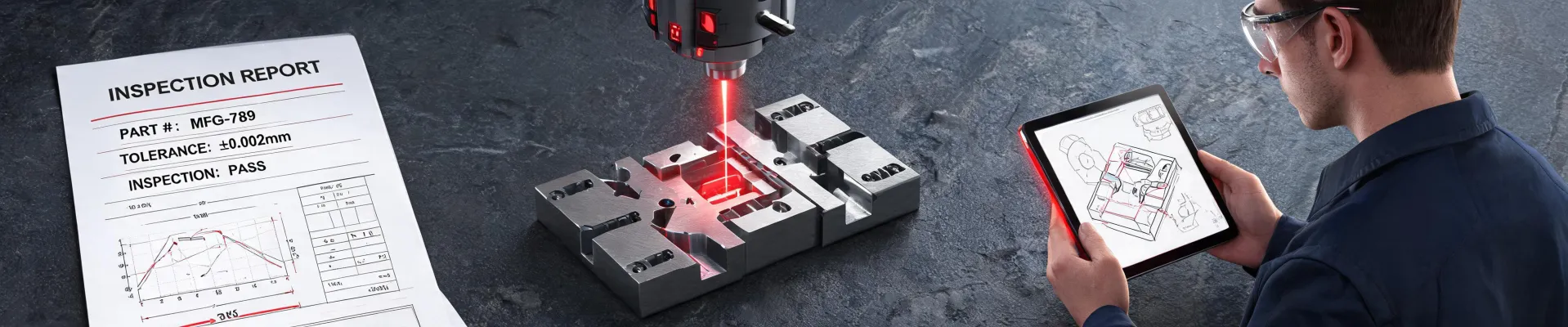
Short answer: Kennametal boring bars for deep-hole metal boring; China CNC precision turning shops for deadline-sensitive medium-volume precision work; a CNC milling machine for wood and soft materials; and for fine features on non-metal parts, you want a picosecond laser, not a CO2 laser. Everything below that is supporting detail—but that first sentence is the part that matters.
I'm a manufacturing engineer at a mid-sized industrial parts company. I've handled close to 80 rush orders in the last three years—some I chose, some I inherited after the original vendor missed a promise. What follows is a working set of thresholds, not a textbook.
Kennametal boring bars: when they earn the price tag
For bores deeper than 3× the diameter, and especially where finish matters, Kennametal's carbide boring bars are the default for a reason. In our own testing they hold surface finish (Ra under 1.6 µm) on deep bores through aluminum and cast iron with much less chatter than the substitutes we tried. If the hole is deeper than 4× diameter, the difference in chatter control alone usually pays for the premium.
The Kennametal app is worth a mention here because it's the thing our younger tool-room guys actually use. Enter the hole diameter, length-to-diameter ratio, and workpiece material, and it returns insert recommendations and starting parameters. In a rushed setup, that's 10-15 minutes saved versus flipping through a printed tool catalog. (I should add: the app's suggested cutting parameters assume the machine and fixture are up to the application. They won't fix a weak setup.)
Where I wouldn't buy Kennametal boring bars: bores smaller than 8 mm, quantities where the job is being awarded on unit price and nothing else, or a material that work-hardens aggressively and the shop can't control pecking. In those cases a domestic alternative can be "good enough"—but I've watched that "good enough" produce chatter three parts into a run when a Kennametal bar held steady for the rest of a lot. The premium tends to earn itself back. Not always, though—that's worth saying out loud.
Watch for hidden cost on the tooling side, too. Kennametal inserts and spare parts aren't universal—before you commit a boring bar to a rushed job, confirm insert stock with your distributor (or in the Kennametal app). I've been burned by this exactly once, and it cost us two days.
China CNC precision turning: fast, cheaper, and riskier than you think
For precision turned metal parts on a tight deadline, Chinese machine shops are usually the only way to get both speed and cost alignment. But two rules, and I can't overstate the second one: confirm inspection capability, and build logistics into the plan.
Last April we had a client need 240 aluminum 6061-T6 sleeves—38 mm diameter, 1.5 mm wall, ±0.02 mm tolerance—in three weeks. Local quote: $47/pc, 4 weeks. A shop in eastern China quoted $18/pc, and 12 business days to our dock in LA including air freight and 4 days of customs. That's roughly 56% cheaper landed, and it hit the date. (I'd have to pull the invoice to give you the number exactly—memory says mid-fifties, but treat that as approximate.)
I've also had the opposite experience. In 2023 a Shenzhen supplier misread a Ra value on a spherical bore. Zero-point-eight vs. zero-point-four micron is a small difference on paper and a large difference when the mating part doesn't seal. They re-machined, we paid expedited freight to recover the schedule, and the client noticed anyway. The lesson isn't "don't source from China"—it's that first-article inspection reports and material certs are not optional, and your incoming inspection can't be waived "because the first piece looked fine."
Here's the outsider blindspot I've stopped expecting people to avoid: most buyers focus on whether a China CNC precision turning shop can hold ±0.005 mm, and completely miss the question of how they hold it in serial production versus how they hold it on a single inspection coupon. A lab sample and a 500-piece run are different capabilities. If you only have time to check one thing, check their process documentation for serial production, not the sample certificate.
CNC milling machines for wood: right tool, right context
For wood, MDF, and most plastics, a CNC milling machine is the correct tool—full stop. A well-tuned machine with a vacuum table will hold ±0.1 mm on a flat good-quality sheet, which is precise enough for cabinet work, signage, and most architectural millwork.
The catch: wood CNC milling and metal CNC milling are cousins, not twins. Spindle speed ranges, dust extraction, and workholding are different worlds. If your shop is already running metal, don't assume the same machine handles wood for free—dust ingress on the wrong spindle and linear rail combination will start causing you problems within a month, and you'll chase it for another three.
Honestly, I'm not sure why some wood CNC platforms advertise tolerances that sound suspiciously like metal-tool specs. My best guess is it's a spec-sheet trade, not a functional claim. If you're buying one, look at cut speed on the actual material you'll run, not the tolerance row. (My experience is limited to small and mid-size shops in the Midwest. Different markets, different constraints.)
PicoSure vs. CO2 laser: what the comparison actually means
"PicoSure vs. CO2 laser" is a slightly confused way to ask the question, because these two tools aren't competing for the same job. A PicoSure-class picosecond laser is a cold-ablation tool—very small heat-affected zone, best on fine features in non-metals or thin metal foils. A CO2 laser is a workhorse: fast, broadly tunable across non-metals, and much cheaper per hour to run. Neither is "better." Here's the split that has held up for us:
- Cutting micro-features on medical-grade polymers, ceramics, or thin glass? Picosecond laser. The heat-affected zone can be under 5 microns, which CO2 cannot match.
- Cutting or engraving wood, acrylic, leather, or thicker signs? CO2 laser. Faster, cheaper, and there's enough material thickness that the small HAZ difference is irrelevant.
- Cutting sheet metal? Neither—you need a fiber laser, or a CNC router if thickness is generous.
Cost reality: a CO2 laser at our shop runs a couple of dollars per hour in consumables and power; a picosecond laser runs 3-5× that depending on the source. If you only need ±0.1 mm finish on wood or acrylic, don't upgrade to a picosecond source to feel safe. You'll pay more to cut slower on the same job.
What I've never fully understood is why some laser-cutting marketing bundles picosecond capability into "makes wood cuts looking premium." My best guess is sales coverage. But a picosecond source tuned for wood cuts burns the material—it doesn't cut it. If that's your application, save the money.
Where this guidance breaks down
Two caveats I'd want you to note, because they're where my advice stops being useful.
First, my experience comes from roughly 80 rush orders across metal machining and supplier selection. If you're running production above ~10,000 pieces per month, the economics change shape—tooling wear and spindle-hours start to dominate in ways my rush-order pattern doesn't model well. Ask someone who runs high-volume production; my numbers won't transfer.
Second, regulated industries (medical device, aerospace) add supplier qualification and traceability requirements that override almost everything above. The right supplier in my world might fail a NADCAP audit in yours. That's a different article.
If I had to compress the whole thing: the cost that actually hurt our clients in these rush jobs was never the tool price. It was downtime, rework, and missed dates. Keep the decision framed around those three, and the tool choice usually sorts itself out.