The deadline that wasn't negotiable
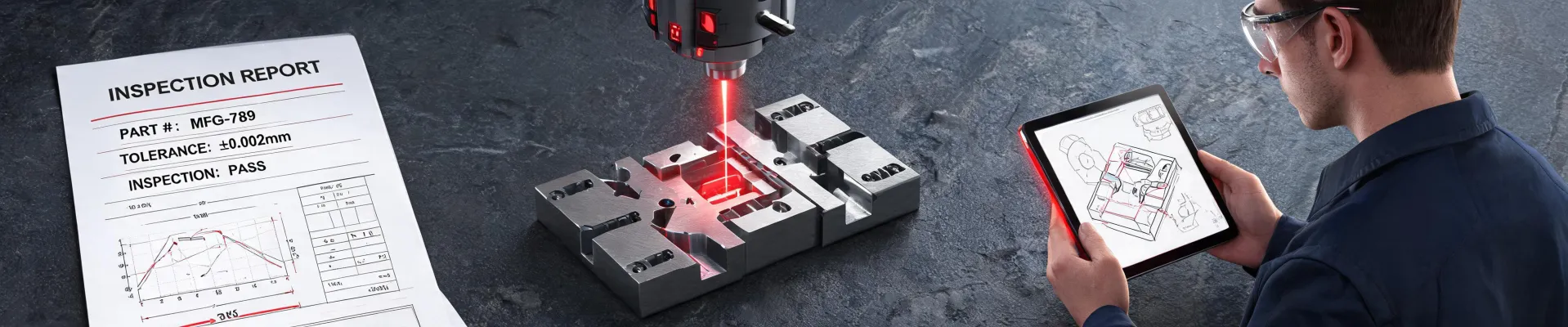
In April 2024, a medical device OEM we've supplied for six years called with something unusual: a batch of 120 acetabular reamers, four weeks from purchase order to dock delivery. Standard lead time on those is usually six to eight weeks, and that's before we've run first-article inspection. But the customer had a new instrument tray rollout scheduled with a hospital system, and that date had already been communicated downstream.
If you don't work in orthopedics, here's what an acetabular reamer actually does. It's the cutting tool a surgeon uses to prepare the socket in the pelvis before a hip replacement. Under power, it removes cartilage and shapes the bone so the cup implant sits flush. The tolerances on the spherical cut are tight—we work to a 0.32 μm Ra surface finish on the cutting edge, and the profile has to match the implant trial head within a couple thousandths. A reamer that cuts a slightly off-profile socket leads to a loose cup, and a loose cup leads to a revision surgery. Nobody in this chain treats these as optional specs.
So when our operations manager forwarded the PO and asked whether we could hit four weeks, I looked at the material certs we had on hand—good—the inspection queue—thin—and the tooling we'd need to order. That last one was the problem.
The tooling scramble
We machine the reamer shells from 17-4 PH stainless on a pair of Doosan turning centers, then finish the cup profile on a 5-axis mill. For the turning operations, we lean on a fairly narrow set of inserts—CNMG and DNMG, mostly, with a PVD-coated grade for the finish pass. Over the years we've standardized on Seco turning tools almost entirely, mainly because their grade consistency has been good to us and our tool crib guy can look up anything in the Seco tools catalog without calling anyone.
When I pulled up the Seco tools catalog to spec the inserts for this run—we needed a fresh batch of the finishing grade, plus some boring bars for the ID work—I noticed our usual grade was listed with a 10-day lead time from the distributor. That's not terrible, but if the inserts arrived late and failed first-article, we'd be into week three with no margin. I went ahead and ordered, and then did something I don't usually do: I asked the distributor if they had any of the previous-grade inserts in stock locally as a backup. They did—about 40 pieces at a branch 90 minutes away—and I reserved them, just in case.
While the inserts were in transit, we started prepping the job. We had a fixture plate from a similar reamer family, but the bolt pattern was different, so we needed a new sub-plate. Normally that's a two-day job for our tool room, but they were buried, so I asked my inspection lead whether we could 3D print a temporary fixture just to get the first-article program proved out. She'd been pushing to get a resin printer into the inspection department anyway—not for production, just for gages and staging fixtures—and this felt like a reasonable excuse.
That led me down a rabbit hole. She wanted to know whether the resin printer she was looking at could print multiple colors, because she wanted to color-code the fixture blocks by job family. I spent twenty minutes on forums trying to figure out whether resin 3D printers can print multiple colors, and the short answer is: mostly no, not in the way she wanted. Some units do multi-material or multi-color resin in a single build, but the material options are limited and the surface finish isn't what you'd want for a fixture that has to register something within five thousandths. We shelved that idea and just printed the fixture in one color, then stuck a label on it. Dumb, but effective.
The fixture worked. We ran the first-article program and got a green light on the turning side—profile dimensions were in spec, surface finish came in at Ra 0.29 μm on the cut edge. That was Wednesday of week two.
Then the inserts showed up
Thursday morning, the 40-piece backup batch arrived from the local branch. Friday, the main order from the distributor came in. I didn't think to compare them side by side. Same grade designation, same chipbreaker code, same package. That was the whole point of standardization.
Our operator ran the first batch of ten reamer bodies over Friday and Saturday. Monday morning, the inspection report came back, and the surface finish had dropped to Ra 0.44 μm on the cutting edges—well over the 0.32 μm spec. Not a catastrophe, but not shippable for a surgical instrument either. The profile dimensions were still fine. Just the finish.
I pulled the two insert batches apart and looked at them under the toolmaker's scope. The backup batch from the branch had a notably sharper edge prep—you could see the hone line clearly at 40x. The main order batch had a slightly heavier edge prep, which on paper is still "within grade spec" but in practice runs hotter and smears the finish on 17-4 PH at the feeds we were using.
And here's the thing that still bothers me: both batches were technically correct. Same grade, same coating, same geometry on the print. But the edge prep varied enough that one ran clean and one didn't. The 'just compare part numbers' approach to tooling assumes a level of consistency that isn't always there—and if you catch it on a medical job with a fixed deadline, you're already late before you know it.
The call I didn't want to make
We had 110 reamers left to run and ten days before the ship date. The backup batch from the local branch could finish maybe 30 pieces before we'd have to swap to the main order. That left 80 pieces exposed to the bad finish, and reworking a surgical reamer's cutting edge is not something you want to do casually.
I called the distributor Monday afternoon. They had another batch of the same grade at their regional warehouse—but shipping standard would put it at our dock Wednesday, which left us Friday and Monday to run 80 pieces and inspect them. Tight but doable, if nothing else went wrong.
Or they could overnight it for a $400 premium, which would put the inserts on our dock Tuesday morning and give us three full production days plus a buffer.
Here's the math I ran in about ninety seconds: the order was worth $48,000. If we missed the ship date, the customer's tray rollout slipped, and I had no confidence we'd get the next PO. A $400 rush fee against a $48,000 order with a hard downstream deadline—that's not a close call. I approved it.
But I'll be honest: I second-guessed it for about six hours. Had I just wasted $400 because I couldn't tell the operator to slow the feed down and use more coolant? Was I being paranoid about the finish spec? I've run enough jobs where 'good enough' turned out to be fine—what if this was one of those?
Tuesday morning, the inserts arrived. We ran a test cut, checked the finish, got Ra 0.28 μm. Ran the rest of the batch. Every piece inspected clean. The reamers shipped Thursday of week four, two days ahead of the deadline, and the customer's tray rollout went off without a hitch.
What I actually learned (and what I'm still figuring out)
The $400 was cheap. That's the easy lesson. The harder one is that I spent two days of a compressed schedule managing a tooling inconsistency that I didn't know to look for, because I assumed that identical part numbers meant identical performance. If I'd known to compare edge prep on receipt—or if I'd just asked the distributor up front whether the batch matched the samples we'd qualified—I might have caught it before we ran ten pieces. Or maybe not. Insert-to-insert variation within a grade is a real thing, and I'm not sure our inbound inspection protocol is set up to catch it.
We've since added a first-piece finish check on any new insert batch before it goes into a production run. It adds about 15 minutes to changeover. My inspection lead thinks it's overkill. I think 15 minutes is a lot less expensive than a $400 overnight fee and a week of stress—and way less expensive than missing a medical device delivery.
The other thing I keep chewing on: I've been reading a lot of additive manufacturing investment news lately, partly because my inspection lead keeps forwarding me articles about shops that have brought polymer or metal printing in-house for fixtures and low-volume parts. The pitch is always the same—cut lead times, reduce tool room backlog, iterate faster. And on paper, sure. But my one experiment with printed fixtures on this job was a color-coding rabbit hole that ended in a label maker. A 3D-printed staging fixture saved us maybe half a day. A $400 rush fee saved the order. Those aren't the same kind of value, and I think the AM news cycle sometimes conflates them.
Maybe we'll get there. For now, when a deadline is fixed and the downside is a lost customer, I'm going to keep paying for certainty. The cheapest quote isn't the cheapest outcome—it's just the one that's easiest to put on a purchase order.