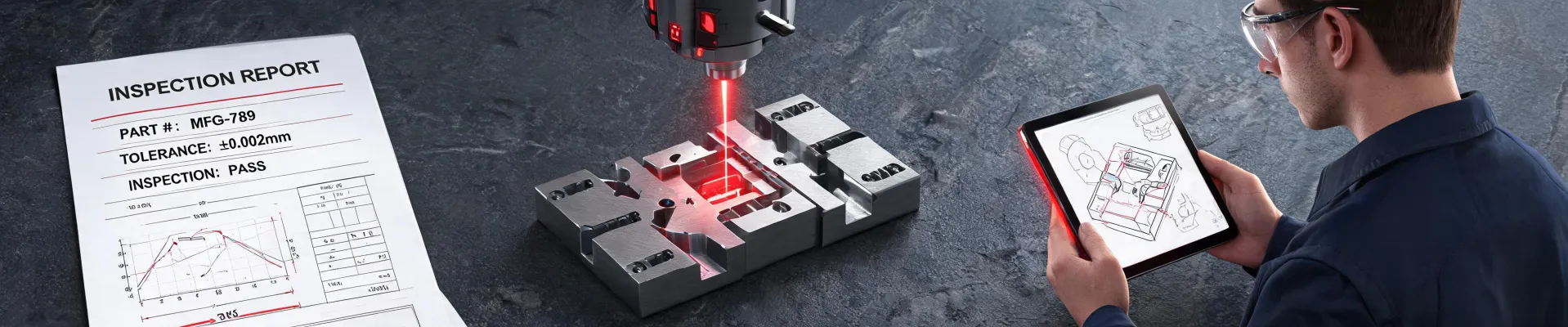
The first thing I check on a coherent laser isn't the peak power. It's the beam profile after the machine has been running for an hour. I've spent four years reviewing industrial laser systems before they ship, and I've rejected units with perfect sticker specs because the beam fell apart once the optics came up to temperature.
Bottom line: If you're evaluating a laser for cutting, welding, or marking, ask for beam profile data from the actual unit you plan to buy—not a brochure. That one request will tell you more than most Coherent laser news updates I see.
Why I sound this picky
I'm a quality and brand compliance manager at a laser manufacturer. Roughly 200 systems pass through my review every year. In Q1 2025, I rejected about 8% of first assemblies because of beam geometry issues—not because they didn't lase, but because they didn't lase the way the datasheet promised.
That didn't make me popular on the production floor (unfortunately). It did save us from sending out machines that would have failed a customer's weld test or produced inconsistent marks.
Every week there is Coherent laser news about higher power or a smaller spot. That's exciting. But in my experience, the gap between a good laser and a great one is rarely in the headline. It's in the beam profile data at 20%, 50%, and 90% of rated power. It's also why OEMs like Trotec build Coherent sources into their machines—they need repeatable beam quality, not just peak watts.
What a beam profiler actually tells you
A power meter tells you how many watts are coming out. A Coherent Inc laser beam profiler tells you where those watts are, and how stable that distribution stays. Beam width, M², asymmetry, astigmatism, pointing drift—these matter more than the raw power number for most processes.
Per ISO 11146 (ISO 11146-1:2005), beam width is based on the second moment of the intensity distribution. That's a mouthful, but it means the number is a weighted picture of the whole beam, not just the bright spot in the middle. A higher-order mode can look great on a piece of thermal paper and still weld poorly because the focal spot is larger than expected.
It's tempting to think M² only matters for fine micromachining. But for cutting thick metal, poor beam quality changes the kerf width and the heat-affected zone. The 'it's just a laser' advice ignores how much the resonator and optics affect the beam at high power.
Most buyers focus on average power and wavelength. They completely miss how tightly that power can be focused and how stable the focal point stays over time. The question everyone asks is, 'What's the wattage?' The question they should ask is, 'What's the M² after eight hours of operation?'
Pointing drift is just as sneaky. A beam can stay the same size but walk off the optical path as the chiller temperature changes. On a cutting head, that means the edge taper changes through the day. On a welding line, the overlap shifts. A beam profiler catches this before the customer does.
When I reject a laser that has the right power
To be fair, a datasheet is a useful starting point. But datasheets don't tell you about unit-to-unit variation. In Q1 2024, we received a batch of 12 fiber lasers. Average power was on spec. When we ran them at 80% of rated power, the beam asymmetry was 1.4:1, against our internal acceptance limit of 1.1:1. The vendor said it was 'within industry standard.' We rejected the batch. They reworked all 12 at their own cost.
Now every purchase contract we sign includes beam profile acceptance criteria: the test procedure, the warm-up time, the power levels, and the limits. That one change was a game-changer for incoming quality.
The root-cause report later said it was a resonator mount issue. They fixed it for future units, but only after we made the test a contractual requirement. Without the profiler, those 12 lasers would have gone out with 'acceptable' power and unpredictable focal quality.
For me, the beam profile is the first red flag. If it's stable and symmetric, the rest of the system usually holds together. If it's drifting, it's not the kind of thing you fix with a software update—it's a mechanical or optical problem that will follow the customer around for years.
What to ask before you approve a laser
If you don't have your own profiler, ask the supplier these questions:
- Can I see the beam profile report for the specific unit I'm buying, not a 'representative' unit?
- At what power level and after what warm-up time was it measured?
- Was the profiler placed before or after the scanning optics?
- What are the acceptance limits for beam pointing drift over an 8-hour run?
- Does the test use the customer's expected coolant temperature?
If a supplier won't answer these, that's a red flag. It doesn't mean they're hiding something—it might mean they haven't measured it. Either way, you don't want that uncertainty inside your production line.
And if you're on the fence about buying your own profiler, start with a rented unit or ask your supplier to run the test in front of you. You don't need to become an optics lab overnight. You need to see the data.
Where I'm not the expert
Now for the boundaries. The advice above is for industrial laser systems in reasonably controlled factory conditions. If you're integrating a laser into a vehicle-mounted system or an unheated warehouse, you'll probably need longer soak tests and wider tolerances. Your mileage may vary.
And there are plenty of laser-adjacent questions I'm not the right person for. If you're looking for the best tool for cutting high branches, I'm not your guy—that's an arborist question, and the answer probably involves a pole saw, not a laser. Same with choosing a 2 inch reamer bit for metalwork: material, spindle speed, and feed rate all matter, and any laser supplier who claims to be the last word on machining tools is overstepping.
Then there's 'when can I use vitamin C after CO2 laser?' That's a clinical question about cosmetic skin resurfacing, not an industrial process question. Industrial CO2 lasers and cosmetic CO2 lasers are different machines, and aftercare advice should come from the clinician or dermatologist who did the treatment. I'd rather miss that keyword than pretend I know something I don't.
Granted, not every application needs a full beam profile audit. If you're just marking packing cases with a low-power CO2 laser, a simpler power check might be enough. But if your process depends on edge quality, weld consistency, or precise focal spot location, the beam profile is where I'd start.
There's something satisfying about watching a beam profile hold steady through an 8-hour run. After all the stress of a product launch, seeing the M² stay in tolerance and the pointing drift stay flat—that's the payoff. It's not the kind of thing that makes a headline, but it's the kind of thing that keeps production lines running.