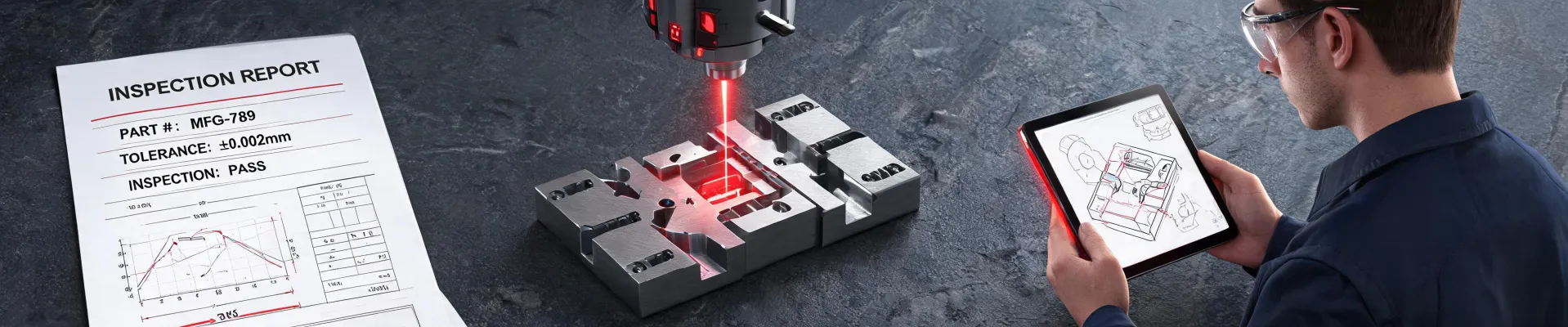
When a customer emails with a 36-hour deadline, I don't start with a machine recommendation. I start with the quote.
That habit came from a painful morning in 2023. We promised a customer 14 stainless steel brackets for an investor demo, and we chose a machine shop that quoted one round number over a shop that itemized material, setup, and inspection. The round number wasn't real. Add-ons appeared, the parts arrived with dross because the shop rushed the laser focus check, and we lost $400 in material rework plus a chunk of our credibility. Since then, across hundreds of rush jobs involving laser cutting, CNC machining, and 3D-printed prototypes, the rule has stayed consistent.
Pick the process by part shape first, material second, and quantity third. A Coherent laser cutter is usually the fastest route for sheet-metal profiles. A CNC machining center is the honest answer for solid titanium or aluminum blocks. A 3D printer—resin or FDM depending on the need—can solve an overnight prototype that no subtractive process could make in time. And the supplier who shows all fees up front, even if the total looks higher, almost always ends up costing less.
Here is the logic behind that framework, plus the edge cases where each choice is wrong.
When a Coherent laser cutter is the right call
If the drawing is a flat profile in aluminum, steel, or stainless sheet, start with laser cutting. You can cut most parts in minutes, skip custom workholding, and get an edge that needs little secondary work. In our lab, a typical 3 mm aluminum bracket takes under two minutes of laser cutting after maybe 30 minutes of programming. On a CNC mill, you can spend that long just clamping the part and proving the toolpath.
A quick clarification: when I say “a Coherent laser cutter,” I mean the class of machines built around coherent industrial laser sources, from CO2 for non-metals to fiber lasers for reflective sheet metals. The brand matters less than the beam. On a rush job, the last thing you want is an unstable focal point producing striations on the back edge of every part.
That's why, for reflective alloys, we verify the beam with a Coherent Inc. laser beam profiler before we cut a single production part. It sounds like a quality-control extra, but it's really a schedule-saving step. If the beam profile has shifted, no feed-rate tweak will fix the edge quality after the parts are cut—and under a deadline, you don't get a second batch.
When “CNC titanium machining quote now” is the right thing to ask
Laser cutting wins for flat shapes, but it has limits. If the customer part is a solid titanium block with tapped holes, milled pockets, and a fatigue-critical radius, no laser on earth will deliver that part faster than a CNC machining center. The laser can cut the outside profile, but someone still has to machine the features, hold the tolerances, and produce the surface finish the drawing demands.
When a customer writes to me “can you get a CNC titanium machining quote now,” my first reply is not “yes.” It's “send the alloy grade, the drawing tolerances, and the certificate requirements.” A titanium quote without those details is a guess with a number attached. Grade 2 and grade 5 machine completely differently. Add a traceability requirement and the process changes again.
Here's a useful price reality check. Public industrial supplier listings in January 2025 put a mid-range 1/2 inch 3 flute carbide end mill for aluminum at roughly $45 to $65. That tool will cut a lot of aluminum before it wears out. But the same tool will not cut titanium at aluminum speeds, and any rush quote that treats tooling as an afterthought is a warning sign.
I've learned to ask “what's NOT included” before asking “what's the price.”
A useful CNC titanium rush quote should include machine time, setup, tooling, material certification, inspection, and freight. It doesn't have to be cheap. It has to be complete. The vendor who itemizes all of that—even with a higher total—saves you from surprise change orders while the clock is running.
Resin vs normal 3D printer: which one saves a last-minute prototype
Sometimes the emergency part doesn't need to be metal at all. A customer needed a one-off fixture for a trade show demo, and the geometry was impossible to machine in the time available. For those jobs, a 3D printer is not a compromise; it's the only practical answer.
The real question is resin vs normal 3D printer, and I'll give you the blunt version: resin for detail, FDM—what most people mean by “normal”—for durability.
Resin printers produce smooth surfaces, crisp text, and fine features that FDM can't match without hours of post-processing. That matters when a prototype will be photographed, handled by investors, or used for a tight form-fit check. The tradeoff is brittleness and lower impact strength. Resin is not the tool for a bracket that has to survive vibration on a test stand.
A normal FDM printer, especially one running nylon or carbon-fiber-filled filament, will make a part that takes more abuse. Surface quality is rougher, and fine details will disappoint you. But if the part has to function, FDM wins. Put another way: the machine that makes the prettiest part is not necessarily the machine that makes the part that works.
One more honest note: don't buy a 3D printer solely for an emergency and expect perfect results on day one. Every printer has a learning curve, and resin printers bring their own mess—washing, curing, and material handling. If the deadline is truly tomorrow and you don't already own the machine, outsource the print to someone who runs one daily.
The hidden variable: quote transparency
In every rush order I've coordinated, the biggest risk was never cutting speed. It was surprise cost and surprise lead time hiding inside an incomplete quote.
I remember comparing two suppliers for an urgent aluminum fixture. One quoted a flat $1,400 and promised three-day delivery. The other quoted $1,650 with setup, material, inspection, and expedited freight listed separately. We went with the flat quote because it looked simpler. By the time the first supplier added an engineering setup charge, an after-hours machining fee, and faster freight, the total was higher than the itemized quote—and we had lost a day arguing about it. Don't hold me to the exact dollar figures, but the pattern hasn't changed.
That's why the most valuable question in an emergency is “what's not included?” A supplier who lists all fees upfront is not being difficult. They're being predictable. Predictability is what lets you make a decision and move on.
When a rush order should be slowed down
I don't want to make this sound like every deadline can be beaten with the right machine and a transparent quote. Some constraints are physical, and some are contractual.
In March 2024, an aerospace client needed titanium brackets on an accelerated schedule for a structural test. The material certificate didn't match the alloy specified on the drawing. No laser cutter, CNC mill, or 3D printer could fix that gap. Shipping the parts anyway would have triggered a $50,000 penalty clause when the audit failed. The right move was to stop, get the certificate corrected, and accept the delay.
That's the boundary condition for everything I said above. A rush process can shorten machine time, but it cannot change metallurgy, skip required inspection, or fabricate a missing material certificate. If your deadline is driven by a real customer need, transparency and process discipline will beat raw speed every time.
So yes, technology matters. A coherent laser cutter, a CNC machining center, and a 3D printer each have a place in an emergency. Use the right one, ask for the full quote, and leave yourself a buffer. The difference between on-time and over budget usually comes down to a quote that tells the truth from the first email.