-
Who This Checklist Is For
-
Step 1: Freeze the Material and Process Spec Before You Ask for Quotes
-
Step 2: Verify the Supplier Actually Does Both Forging and Machining
-
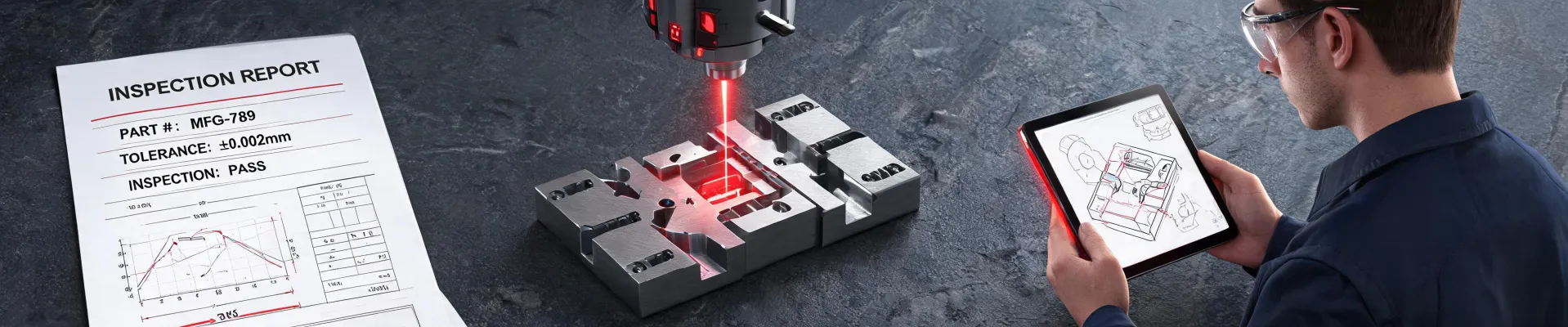
Step 3: Request First Article Inspection Reports—Not Just Samples
-
Step 4: Calculate TCO—Not Unit Price—Before You Commit
-
Step 5: Pressure-Test Secondary Operations
-
Step 6: Ask About Their Measurement Systems (Most Buyers Forget This)
-
Step 7: Lock Lead Times into the PO—Not Just the Quote
-
Step 8: Build First-Article Approval into Every Repeat Order
-
Common Mistakes I've Seen (and Made)
-
Final Word
Who This Checklist Is For
If you're the one signing off on the PO—not the engineer who drew the part, not the machinist who'll run it—this is for you. I manage our component procurement budget ($340,000 annually across roughly 45 suppliers). Over the past 6 years, I've placed orders for brass forgings, shaft forgings, precision machined components, and all sorts of connectors. I've also watched plenty of "small" oversights turn into expensive rework.
This checklist has 8 steps. Each one has a checkpoint. In my opinion, skipping any of them is gambling with your budget.
Step 1: Freeze the Material and Process Spec Before You Ask for Quotes
Here's the thing: most quote discrepancies start with ambiguous specs. "Brass forging" could mean C36000 or C37700. "Shaft forging" could be cold-formed or hot-rolled. If your RFQ says "brass forging, per print," you're inviting each cnc machining parts supplier to guess—and their guesses won't match.
Write down: alloy grade, temper, dimensional tolerances, surface finish, and any secondary operations. Reference recognized standards. For brass forgings, that typically means ASTM B124. For general tolerances, ISO 2768-m is fairly common. For shaft forgings in steel, ASTM A788 covers the basics.
Checkpoint: Can a supplier who's never spoken to you read your spec and quote the same process you intended? If not, rewrite it.
Step 2: Verify the Supplier Actually Does Both Forging and Machining
Some suppliers are forging houses that outsource machining. Others are machine shops that buy forgings. Neither model is inherently bad, but you need to know which one you're dealing with—because your quality risk shifts depending on where the handoff happens.
Ask directly: "Do you forge in-house or buy blanks? Who does your turning? Can I see your process flow?" A cnc machining parts supplier that subcontracted the forging to a third party may not be able to trace heat lots or adjust the forging process when machining reveals a problem.
I'm not a metallurgist, so I can't speak to grain flow or alloy behavior. What I can tell you from a procurement perspective is this: every extra handoff is a place where documents get lost and responsibility gets fuzzy.
Checkpoint: Can they show you a single document trail from raw material to finished part? If it passes through three companies, ask who owns the traceability.
Step 3: Request First Article Inspection Reports—Not Just Samples
Samples are theater. Anyone can cherry-pick a good part. What you want is a First Article Inspection (FAI) report tied to the actual production setup—same tooling, same operator, same material lot you'll see in the run.
For shaft forgings and precision CNC turning parts, the FAI should include dimensional measurements against every drawing callout, not just the "critical" ones. Ask for material certs and any required nondestructive testing. Per ASME Y14.5, GD&T callouts need to be verified properly—not eyeballed with calipers.
Checkpoint: Does the FAI reference the actual lot number and date? If it's undated and unspecific, it's decoration.
Step 4: Calculate TCO—Not Unit Price—Before You Commit
I learned this the hard way in 2022. We had two quotes for a washer y connector assembly. Vendor A: $4.80/unit. Vendor B: $3.95/unit. The gap looked obvious. Then I ran the numbers.
Vendor B charged $350 for setup, $180 for a first-article inspection we hadn't asked about but they insisted on, and $95 per shipment for packaging that met our spec. Vendor A's price included all of it. Over a 2,000-unit order, the "cheaper" quote cost $1,240 more.
Build a simple spreadsheet: unit price + setup + tooling + freight + inspection + payment terms impact + expected defect rate (ask for their historical PPM). That last one matters. A 1% defect rate on 2,000 units is 20 parts—at $40 each to rework or replace, that's $800.
Checkpoint: Can you defend your vendor choice using a single number? If not, you're not comparing apples to apples.
Step 5: Pressure-Test Secondary Operations
Precision machined components rarely ship straight off the machine. They get deburred, cleaned, plated, anodized, or heat-treated. These secondary operations are where lead times stretch and quality slips.
Ask: "Who does your deburring? Is it in-house? What's your standard for edge break?" If they send parts out for finishing, you've added another transit and another queue. For brass forgings that need tumbling, or shaft forgings that require grinding, this step is often the bottleneck—not the machining itself.
Checkpoint: Get the secondary operation lead time in writing. "About a week" is not a number.
Step 6: Ask About Their Measurement Systems (Most Buyers Forget This)
You can't inspect quality into a part. But you can inspect the supplier's ability to measure quality. Ask what instruments they use for your specific tolerances. Calipers are fine for ±0.1mm. For tighter tolerances, you need micrometers, bore gauges, or a CMM. Ask when their equipment was last calibrated. If they can't answer quickly, that's a data point.
I wish I had tracked supplier measurement capability more carefully from the start. What I can say anecdotally is that the two worst quality escapes we've had in 6 years both came from suppliers who were measuring critical dimensions with tools that were a full grade too coarse.
Checkpoint: Name the instrument that will measure your tightest tolerance. If the answer is "calipers," verify the tolerance is loose enough to justify it.
Step 7: Lock Lead Times into the PO—Not Just the Quote
Quotes say "4–6 weeks." POs should say "Delivery no later than March 14." The difference is accountability. I knew I should have gotten written confirmation on a delivery date back in Q2 2024, but we'd worked with that vendor for years. Why bother? Well, the verbal agreement got forgotten and our line went down for two days. That mistake cost us $8,400 in expedited freight and overtime.
Put the date in the PO. Add the consequence for missing it. Even a simple "time is of the essence" clause changes the conversation.
Checkpoint: Does your PO state a calendar date, not a range? If it says "4–6 weeks," rewrite it.
Step 8: Build First-Article Approval into Every Repeat Order
This is the step most buyers drop once a vendor is "approved." I get it—it feels redundant. But tooling wears. Operators change. Material lots vary. A quick FAI on the first 3 parts of every run catches drift before it becomes a shipment of scrap.
For a $2,000 order, a 30-minute inspection at the start is cheap insurance. For a $20,000 order, it's almost negligent to skip.
Checkpoint: Is FAI in your PO terms for every order—not just the first one?
Common Mistakes I've Seen (and Made)
- Assuming "forging" means the same thing to everyone. Cold forging, hot forging, and precision forging produce different grain structures and tolerances. Specify which one you need.
- Ignoring packaging. I've seen $6,000 worth of precision CNC turning parts arrive with nicks and dings because they were tossed in a cardboard box. Specify packaging in the PO.
- Choosing a supplier based on one good experience. Long-term relationships are valuable, but they don't replace data. Track every order's quality and delivery performance, or you're relying on memory—and memory is generous.
- Skipping the trial order. Before you commit to a large run of shaft forgings or brass forgings, place a small trial order. It's the cheapest stress test you'll ever run.
Final Word
Prevention beats rework. Every time. The 8 steps above have saved us an estimated $12,000 in avoided rework and expedited freight over the past 18 months. Five minutes of verification on the front end is worth five days of correction on the back end.
You don't need every supplier to be perfect. You just need to know where the risks are and build a checkpoint for each one. That's what separates a smooth order from a fire drill.