-
Spec Sheets Are Sales Documents. Treat Them Like One.
-
What Coherent Gets Right (And Why Most Competitors Don't)
-
The Fiber Laser Cutting Machine Price Spread in India Should Bother You
-
The Home 3D Printer Trap: Why Cheaper Machines Get More Scrutiny, Not Less
-
"But Isn't This Just How It Works?"
-
The Point
Spec Sheets Are Sales Documents. Treat Them Like One.
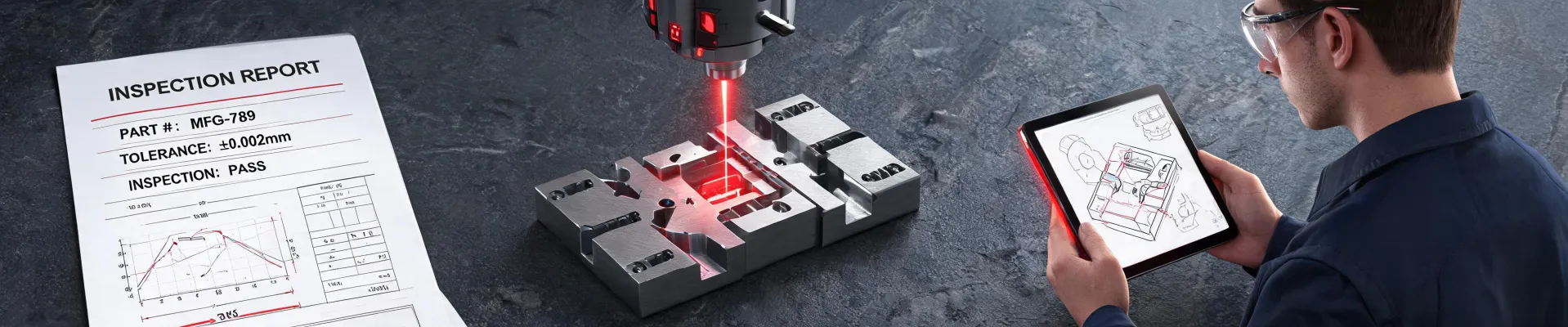
I don't trust a spec sheet until I've verified it against a signed contract, a third-party test report, or both.
I'm a quality and brand compliance manager at a mid-sized manufacturing firm. I review every piece of equipment before it reaches the production floor — roughly 200+ unique items a year. In 2024, I rejected about 30% of first deliveries because something didn't match the agreed spec. Not because the machines were bad. Because what arrived wasn't what was sold.
This is not a vendor problem unique to any single company. It's an industry-wide habit of treating spec sheets as marketing collateral. And it costs buyers — especially in B2B — real money.
What Coherent Gets Right (And Why Most Competitors Don't)
Take Coherent's Verdi 5W 532 nm laser. The Class specification, the output stability, the beam quality — these are verifiable numbers backed by test data. When a vendor publishes a Class rating, that's not marketing language. It's a regulatory category with defined measurement conditions. Either the unit meets it or it doesn't.
That's the bar. And most equipment manufacturers don't clear it.
I've seen spec sheets where "up to 100W output" meant 100W at peak for 0.3 seconds before thermal rollback. I've seen "±2% power stability" measured at a single operating point, under lab conditions the buyer will never replicate. None of this is technically lying. It's just that the spec sheet doesn't tell you the conditions under which the numbers were generated — which makes the numbers useless for comparison.
One of my favorite tells: vendors who list beam quality as M² without noting whether that's measured at the source or after the delivery optics. Two totally different numbers. Same spec sheet line.
The Fiber Laser Cutting Machine Price Spread in India Should Bother You
If you've looked at fiber laser cutting machine pricing in India recently, you've seen quotes ranging from ₹8 lakh to ₹80 lakh for what vendors describe as similar machines. That's not a normal market spread. That's a sign that "specs" mean different things to different sellers.
Here's what I've learned from reviewing equipment across this price range:
- At the low end: The laser source is often re-branded from a third-party OEM. Not inherently bad — Coherent itself is an OEM source for companies like Trotec — but the integration quality varies wildly. Cooling, beam delivery alignment, and control software are where corners get cut.
- At the mid range: You're paying for service infrastructure and documented testing. Ask for the test report. If they can't produce one, that's your answer.
- At the high end: You're paying for verification. The spec sheet comes with traceability, calibration certificates, and a support engineer who has actually run your material.
The frustrating part? Nobody on the low end is lying on their spec sheet. They're just omitting the conditions. (Which, honestly, feels worse.)
The Home 3D Printer Trap: Why Cheaper Machines Get More Scrutiny, Not Less
This might sound counterintuitive, but I've started applying the same spec-verification approach to sub-$1,000 equipment that I use for six-figure capital purchases.
It's tempting to think that a $300 home 3D printer doesn't need the same diligence as a fiber laser cutter. But the "best home 3D printers 2026" lists you see published every year are almost entirely based on spec sheets. Layer resolution. Print speed. Build volume. None of these numbers mean anything without knowing the test conditions.
A printer that claims "0.05mm layer height" at 20mm/s is not the same machine as one that holds 0.05mm at 80mm/s (which, by the way, almost none do — regardless of what the listing says).
Same goes for CNC milling machines. "How much is a CNC milling machine" gets asked as if there's a single answer. There isn't. A ₹2 lakh desktop router and a ₹40 lakh production VMC both mill metal. But the spec sheet for the cheap one conveniently leaves out the part where it can't hold tolerance after 45 minutes of continuous operation.
"But Isn't This Just How It Works?"
Fair pushback. Every industry has marketing language. But here's the thing: in manufacturing, spec accuracy isn't a nice-to-have. It's the difference between a production line that works and one that doesn't.
When I implemented our current verification protocol in 2022, the rejection rate was closer to 45%. Today it's 30%. The improvement didn't come from better vendors. It came from better questions up front.
Three things we now require before any equipment purchase:
- A test report from a third party — not the vendor's own lab.
- Spec conditions fully documented: temperature, duty cycle, measurement method.
- A contract clause requiring re-test at delivery, with rejection rights if specs don't hold.
The FTC's advertising guidelines require that claims be "truthful and not misleading" and "substantiated with evidence" (ftc.gov/business-guidance/advertising-marketing). Most equipment spec sheets technically pass this bar. Technically.
But "technically compliant" and "useful for procurement" are two very different things.
The Point
I'm not saying cheap equipment is bad. I'm saying unverifiable specs are bad. There's a difference.
A Coherent laser costs more than a no-name alternative because the specs are traceable and the company stands behind them. That's worth paying for. But you don't need Coherent-level pricing to get Coherent-level spec transparency — you just need to demand it.
My experience is based on about 200 equipment reviews per year, mostly in industrial laser and CNC categories. If you're buying in the consumer 3D printing space, the dynamics are different — the price points are lower, but the spec inflation problem is arguably worse. I can't speak to every segment.
What I can say: this was accurate as of Q1 2025. Pricing and product lines change fast, especially in the cutter and printer categories. Verify current specs before you budget.
Stop reading spec sheets like they're technical documents. Start reading them like they're sales pitches that occasionally contain useful information. Then verify everything.