-
Why the lowest quote always costs more in an emergency
-
Coherent Verdi laser: my favorite for thin, precise parts
-
Coherent Monaco laser: when clean ablation beats brute force
-
Cloudray 1500W handheld laser welding machine: a field tool, not a miracle worker
-
what all can 3D printers make? Wrong question.
-
The honest edge case: when no laser will save you
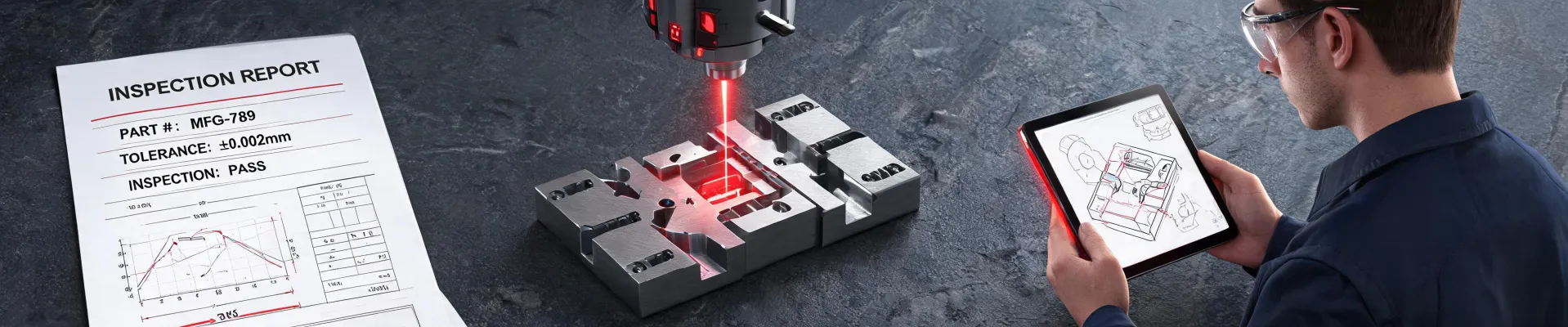
In March 2024, a medical-device client called at 2:40 p.m. with a problem that makes every production planner's stomach drop. Their validation fixture had arrived cracked, and the test slot was scheduled for 8 a.m. the next morning. The bracket was 1.5 mm aluminum with a ±0.05 mm slot tolerance—a five-day job by any normal CNC quote. We cut it in-house on a Coherent Verdi laser, checked the dimensions on a vision system, and put it on a courier by 5:50 a.m. It landed with 15 minutes to spare.
That wasn't luck. It was the result of a decision path I've repeated on over 200 rush orders in seven years as a production coordinator. Last quarter alone, we handled 47 urgent jobs with a 95% on-time rate. The lesson I keep coming back to: when the clock is the client, start with the total cost of failure, not the price per hour.
If you're weighing a coherent-laser source against a Cloudray 1500W handheld laser welding machine, or trying to decide whether a 3D printer can save a dying deadline, the first question should not be 'which machine is cheapest?' It should be 'what failure am I really buying insurance against?'
Why the lowest quote always costs more in an emergency
My rule of thumb after years of triage: in about 60 percent of cases, the lowest quote we evaluated came with hidden costs bigger than the price difference. Sometimes those costs are invisible until the first inspection report.
One of my biggest regrets is a project where we let a supplier bid cheap work on a China plastic injection molding machine. The per-part price looked excellent—about 40 percent lower than our internal estimate. But the existing mold was designed for a slightly different gate location. The first samples had weld lines and short shots. We reworked the mold, paid air freight twice, and still delivered parts that needed hand finishing. The customer's line went down for two days anyway. The 'savings' turned into a $4,200 overage plus a customer who no longer trusts our judgment when I promise a deadline. It took three months to rebuild that relationship.
An expensive lesson? Yes. But it also shaped the way we buy and recommend production equipment today. I'd rather pay a premium to a vendor who can prove the process works than take a chance on a low quote that has no process data behind it.
Coherent Verdi laser: my favorite for thin, precise parts
When a rush part has tight tolerances and thin material, I usually reach for a Coherent Verdi laser. Verdi is a continuous-wave laser with very low noise and high beam stability. That matters more than most people think: if the beam wavers even a little during a fast cut, the edge angle changes and the part drifts out of tolerance.
On that March bracket, we used a Verdi with a 0.6 mm spot and a controlled kerf compensation. The slot tolerance of ±0.05 mm would have been risky with a normal fiber laser. The Verdi's stability let us hold a consistent cut throughout the night and skip secondary machining. That's the difference between a tool that 'works' and a tool that works predictably on a deadline.
Coherent Monaco laser: when clean ablation beats brute force
Coherent Monaco is a different animal. It's a picosecond ultrafast laser, and I don't recommend one for basic cutting if a simpler tool does the job. But in emergency situations with heat-sensitive materials, the Monaco has saved us more than once.
Last year, a client needed 50 ceramic strips patterned for an R&D pilot. They had already tried a fiber laser at their own facility; the thermal damage turned the ceramic brittle. We set up a Coherent Monaco laser with the sample from their rejected lot, dialed in the fluence, and processed all 50 strips in about six hours. No micro-cracks. The next morning, the prototype performed exactly as designed. That order was $9,500—not huge—but it kept a $250,000 development program on schedule.
Cloudray 1500W handheld laser welding machine: a field tool, not a miracle worker
People sometimes see 'handheld laser welder' and assume it's a shortcut to save money on robotic cells. In a rush, it can be exactly what you need—if the operator knows what they're doing.
We keep a Cloudray 1500W handheld laser welding machine for repairs that would otherwise require moving a massive assembly back to our shop. Two months ago, a food-processing client had a stainless steel frame crack at a weld seam. The frame was 4 meters long and installed in place. Tearing it out meant a three-day shutdown. We sent a technician with the handheld unit, cleaned the oxide layer, set the right shielding-gas flow, and made a repair weld in 40 minutes. The line was running by lunch.
The catch: that same unit can create porosity, undercut, and distortion within seconds if the operator is careless. The training cost is real. If your 'cost savings' comes from skipping operator skill, the first late-night repair will erase the savings.
what all can 3D printers make? Wrong question.
I get asked what all can 3D printers make? in nearly every urgent-project meeting with a new client. It's a fair question, but it's backwards.
3D printers can make prototypes, custom fixtures, end-of-arm tooling, internal lattices, dental aligners, and plenty of end-use parts. We've printed 30 functional samples in a day while the customer tested geometry against a machine assembly. But the useful question is not 'what can they make?' It's 'what can they make fast enough and with the right quality?'
If you need ten thousand identical parts next month, a 3D printer is not the answer. Once an injection mold or hard tooling exists, a China plastic injection molding machine can produce parts at seconds per cycle. Before that mold exists, 3D printing beats waiting for tooling if your volume is low and geometry is complex. The same logic applies to lasers: each process has a window of material, thickness, tolerance, volume, and time.
The honest edge case: when no laser will save you
I don't want to oversell lasers. There are deadlines that can't be hit regardless of tooling. If the raw material isn't in the building, no coherent-laser system can cut air. If a bearing housing is soaked with oil, the handheld welder will make the problem worse before it makes it better. And if the client needs 20,000 pieces in 18 hours, even injection molding won't help without a mold that already exists.
Per FTC advertising guidelines, a claimed capability needs evidence behind it. I apply the same standard to my own advice. When a client asks for something impossible, I tell them early. That conversation is awkward in the moment, but it builds trust—and trust is the real callback metric in custom manufacturing.
So what's the bottom line? Value over price. Not because I'm ignoring budget, but because I've seen too many $200 savings turn into $2,000 problems when the part fails, the project slips, and a customer loses faith. When you're in an emergency, you need a process that's proven, an operator who's trained, and a deadline that's real. Everything else is just photons.