When someone asks me which laser system they should buy, I never give a one-line answer. There isn't one.
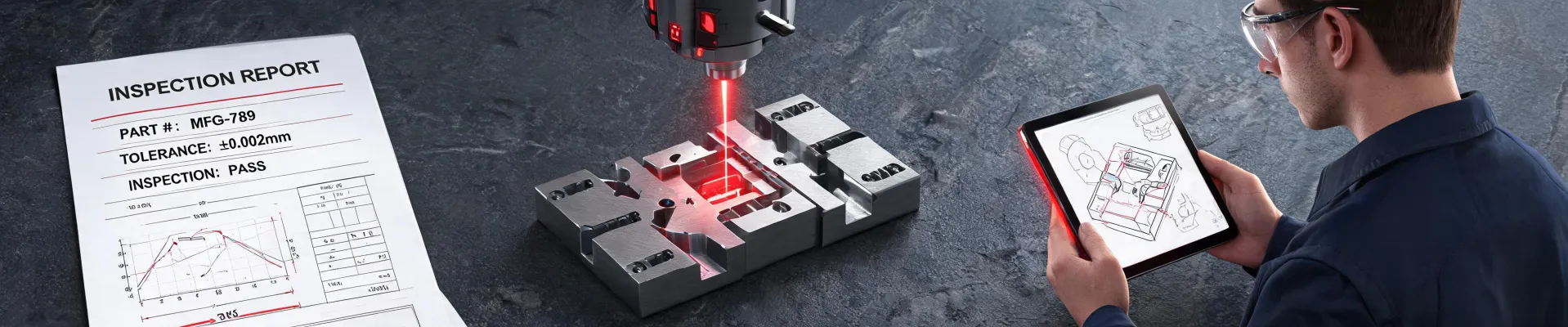
I work on the quality side of a laser manufacturer—I've reviewed every system that leaves our floor for about four years now, roughly 200 units annually, across CO2, fiber, and ultrafast product families. In 2024, I rejected around 3% of first deliveries for beam alignment or calibration documentation gaps. One of those rejections triggered a $22,000 redo and some bruised customer relationships. So when I say "take your time choosing," I mean it.
The good news is that you don't need to be a laser physicist to make a sound decision. You need to compare four things: beam quality, material compatibility, operating cost, and total cost of ownership. Let me walk you through each one from the floor where I verify these systems.
Beam Quality: The Spec Everyone Glosses Over
The first thing most buyers mention is wattage. "We need a 3kW laser," they say. Power is an easy number to compare, so people anchor on it. The problem is, a 3kW laser with a mediocre M² factor can produce worse results than a 2kW system with excellent beam quality—especially when it comes to cutting speed, kerf width, and edge roughness.
What I look for instead is the M² value (or beam parameter product, BPP) across the full operating range. Two systems can both claim "M² < 1.3" on paper yet perform very differently in practice. One might hold that quality from 10% to 100% power; the other drifts noticeably at lower power settings. We measure this with calibrated beam profilers, and we've tested units from several coherent laser beam profiler suppliers over the years. The consistency varies far more than the spec sheets suggest (note to self: finish that 2024 supplier comparison log before Q1 reviews).
Here's an unexpected conclusion from our acceptance testing: for thin-gauge sheet metal cutting, a 1.5kW fiber laser with excellent beam quality outperformed a 3kW competitor unit on cycle time in 70% of our test cuts. The beam quality made the difference. People don't expect that—they assume the 3kW "must be faster." It wasn't.
As of Q4 2024, that still holds in our test data. If anything, newer beam-shaping optics are widening the gap.
Wavelength and Material Compatibility: CO2 Is Not Dead
Each laser type has a natural lane. The misconception is that newer always means better—it doesn't. It means different.
CO2 (10.6 μm) still wins for non-metals. Wood, acrylic, leather, and many engineering plastics—including polyamide—absorb far-infrared light strongly, which gives you cleaner cuts with less charring than a fiber laser. I've seen shops switch entirely to fiber and then hit a wall when they can't cut acrylic without edge discoloration. The laser wasn't broken. It was the wrong wavelength for the material.
A case in point: we had a customer making brake system components who kept getting noise complaints. End users were asking, "Why is my brake squeaking when I press it?" The root cause traced to a poorly cut sensor aperture in a polyamide housing—the rough edge let the sensor vibrate at certain frequencies. They moved that operation to a CO2 laser with a rescaled optical path, and the vibration issue disappeared. The brake design never changed. The manufacturing quality did.
Fiber (1.06 μm) is the metal specialist. Steel, stainless, aluminum—fiber lasers mark and cut them efficiently. In fact, most coherent laser welders on the market fall into the fiber category for good reason. If you're welding battery tabs, brackets, or enclosures, a fiber laser with a decent wobble head is hard to beat.
Ultrafast (picosecond/femtosecond) is the precision class. Essentially no heat-affected zone, which is essential for stents, diagnostic chips, and thin-film patterns. The trade-off: you'll pay a significant premium.
Now for the part many laser reps won't say: a laser isn't always the right answer. For parts with complex 3D geometry, a CNC machining manufacturer and supplier is often the better choice. And for high-volume polyamide components like housings, clips, or casings, polyamide injection molding will beat any laser process on per-part cost. We sell laser systems, but we recommend CNC and injection molding when the economics point that way. It costs us some short-term sales, and it keeps customers for years.
Operating Costs: What the Quote Doesn't Show
The purchase price is one number. The operating cost is another story, and this is where "cheap" gets expensive fast.
CO2 lasers consume laser gas (a CO₂/N₂/He mix) and need more frequent optics maintenance. Budget roughly 3-5% of the purchase price annually for consumables—that's from our 2024 service data across the installed base. For high-usage shops, fiber has the clear edge: no laser gas, fewer optics, and 35-40% wall-plug efficiency versus 10-15% for CO2.
Ultrafast systems sit in between. Diodes are typically rated for 100,000+ hours (as of 2024 manufacturer specs), but the oscillator guts appreciate a clean, temperature-stable environment. They're not the right fit for a dusty shop floor.
In my opinion, the operating cost verdict is straightforward:
- Non-metal cutting or marking at low-to-moderate volume → CO2 is still the cost-efficient choice.
- Metal cutting or welding with a heavy duty cycle → fiber wins on energy and maintenance.
- Micro-processing where precision is non-negotiable → ultrafast is the only option that makes sense.
Total Cost of Ownership: A Concrete Example
In 2024, we compared a $38,000 marking system against a $51,000 alternative for a polyamide component line. The cheaper system showed noticeable beam profile drift after two hours—M² moved from 1.3 to 1.6, enough to push markings out of traceability spec. The higher-priced system held at 1.2 across a 7-hour run.
The $13,000 difference was real. But the first system would have generated rejected parts, process re-validation costs, and potential audit risk. The higher-priced system paid back that difference in about 8 months through avoided downtime alone. The "cheap" option was the expensive one.
From my experience, this pattern comes up in roughly 60% of the system evaluations I've reviewed—the lowest quote tends to cost more in the long run. Part of me wishes that wasn't true, because I know many shops are working with tight capital budgets. But the way I see it, the budget isn't just the invoice. Budget for install, training, tooling, maintenance, and production loss during unplanned downtime. Those factors usually outweigh the purchase price gap.
A Quick Selection Guide
If I had to compress the floor testing into five lines:
- CO2 for wood, acrylic, rubber, leather, and polyamide cutting/marking.
- Fiber for steel and aluminum cutting, welding, and high-duty-cycle production marking.
- Ultrafast for micro-machining, semiconductors, medical devices, and any application where a heat-affected zone is not acceptable.
- CNC machining when you need 3D contours, internal threads, or tolerances around ±0.01mm—find a solid CNC machining manufacturer and supplier rather than forcing a laser to do a milling machine's job.
- Polyamide injection molding when volume exceeds roughly 10,000 units per year and you need repeatable dimensions at low per-part cost. Lasers complement it (marking, cutting, welding) but won't replace the mold.
The Bottom Line from Someone Who Checks Every System
I still kick myself for not catching an out-of-spec beam profiler batch in 2023. We shipped three systems with incorrectly calibrated profilers to integrators, and their acceptance tests failed on site. That mistake ultimately drove the $22,000 redo I mentioned at the start. It also pushed me to implement a 24-hour soak test for every incoming profiler before acceptance.
The lesson I keep coming back to: the comparison you make on paper is not the comparison you'll live with on the floor. A laser system is a long-term production capability, not a one-time purchase. If you choose based on the lowest upfront number, you may be signing up for hidden costs that dwarf the savings. If you choose based on a single, ideal test cut, you'll be surprised when real workloads expose drift you didn't check.
So do your acceptance testing at multiple power levels. Track the beam profile over a 4-hour session. Ask current users about actual uptime, not just spec sheet values. And then decide—with the total cost in mind, not just the quote.
That's how I evaluate every system, and it's the standard I hold our own shipments to.