It started with a 7 degree tie rod reamer. Not glamorous. It is a cutting tool for reaming tie rod ends in truck suspension, and ours had to hold a specific angle. That one part ended up forcing me to rethink how I buy almost everything, including industrial laser systems. I manage outside spending for a mid-sized precision manufacturing company. My annual procurement budget is around $180,000. That covers custom tooling, machine shop work, and laser equipment. For six years, I have tracked every invoice. I thought I had a handle on the numbers. The reamer proved me wrong.
The Reamer That Started It
In early 2024, we needed a custom reamer for a tie rod end job. The drawing specified a 7 degree tie rod reamer with a 7.0-degree cutting edge. A local shop that specializes in customized 5 axis CNC machining quoted 22% below our usual supplier. The quote looked clean. The CAD preview looked convincing. I almost approved it based on the number alone. That would have been a mistake.
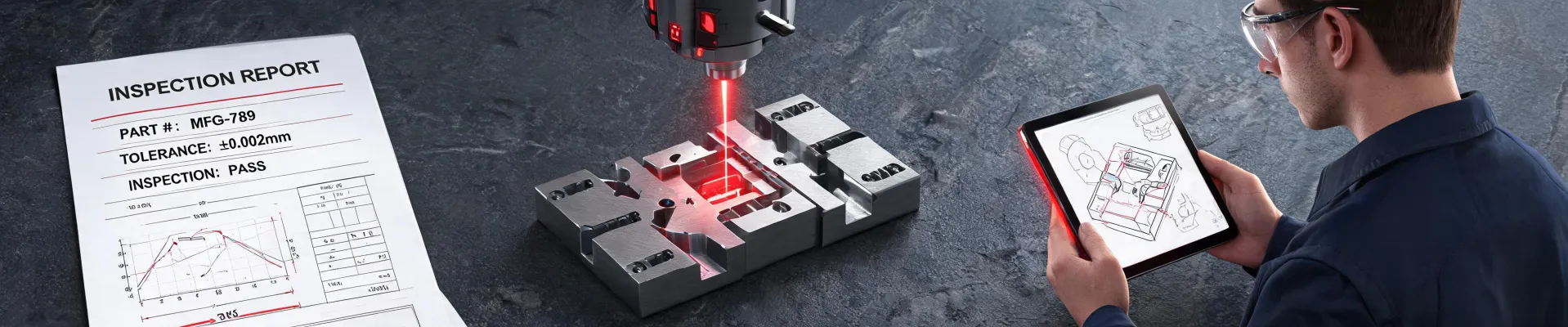
The part arrived three days late with a nick on the cutting edge. The shop offered to fix it, then added a rework fee because we had signed off on the CAD file. 'Signed off' meant we approved a file, not that we approved a defective edge. The inspection report showed the cutting angle measured 7.3 degrees. Our tolerance was plus or minus 0.5 degrees, so technically it passed. For the actual application, 7.0 was the target. A 7.3-degree reamer can work, but it changes contact pattern and accelerates wear. On a tie rod, that means a rough bore and a failed part later. We used it anyway because the schedule was tight. It failed after 90 pieces. The redo cost more than the tool.
When I compared the vendor invoices side by side, I finally understood why the low quote was low. It did not include a CMM report, it did not include the handling fee, and it did not include the expedited shipping we had to pay when the first delivery missed its date. The final invoice was 18% higher than our old vendor's quote. I still kick myself for not demanding a written inspection report before approving the tool.
That was the trigger event. I spent three weeks in our cost tracking system and found that 22% of our budget overruns over six years followed the same pattern: a low first quote, followed by hidden charges or quality issues. In money terms, it was around $11,000 a year. Not enough to break the company, but enough to fund a decent training program or a good piece of test equipment.
The Laser That Made Me Recalculate
The audit led me to our next big decision: buying a mid-power laser system for cutting and marking. We had two vendors in the race. One proposal was from an established laser original equipment manufacturer, and the other was from a lower-price alternative. The spec sheets looked similar. Same wavelength. Same maximum power. Nearly the same beam quality claim. I was about to choose based on wattage per dollar, which is exactly the mistake I had just spent three weeks finding in our procurement history.
This time, we did something different. We rented a Coherent Inc laser beam profiler and set up a side-by-side measurement. A beam profiler is a camera-based instrument that measures a laser beam's width, divergence, and M-squared factor. It turns the word 'high beam quality' into a number you can verify. If you have never used one, it feels like stubbornness. It is not. It is the only way to know what the laser will actually do when the beam hits the material.
The lower-cost unit advertised an M² of 1.2. At first measurement, it looked close. After a 20-minute warm-up, it drifted to about 1.8. Not terrible. For general-purpose cutting, maybe acceptable. For our small features and thin materials, the divergence changed edge quality and kerf width. The coherent-laser comparison unit held M² below 1.3 during the same test. That difference is the kind of thing you cannot see in a PDF.
When I now evaluate coherent corp laser systems, I start with a measurement report, not a datasheet. A few vendors push back. The ones who agree to the test are keepers. Let me put it plainly: spec sheets are marketing. Measurement is the contract. Period.
The Hiring Connection
There is one more layer to this. After we selected the laser, we had to hire an operator. I started searching online for 'what are the best CNC machining schools' because the person we needed would have to understand both machining and basic laser alignment. The local community college program did not cover metrology or optical setup. The graduates could run a mill, but they could not explain why a 7 degree tie rod reamer at 7.3 degrees might be a problem. That distinction matters.
The best CNC machining programs, in my opinion, teach inspection alongside setup. They show students how to use a CMM, a beam profiler, and a tool presetter. When we hired from a school with that focus, my workload dropped. The new operator caught a misaligned fixture at setup instead of after a 40-part run. That single catch paid for the extra time I spent comparing programs.
What The Audit Taught Me
I wish I had tracked first-pass quality by vendor from day one. I had the invoices, but I was not analyzing them. Now I do. I keep a simple spreadsheet with three columns: initial quote, final invoice, and whether the part passed inspection on the first delivery. The fourth column is where I write what I learned. That column is usually the most expensive one to fill.
I do not have hard data on how many buyers make the same mistake, but based on conversations with other procurement people, my sense is that most of us learn this late. I now tell every new engineer: education is cheaper than rework. I would rather spend ten minutes explaining what M² means, or why a tie rod reamer says '7 degree' for a reason, than sign a PO we have to justify later. An informed customer asks better questions. That is how you avoid the $1,200 redo from a 'cheap' option.
In the end, the 7 degree tie rod reamer was not the biggest item on the P&L. It was the wake-up call. The laser work was the bigger lesson: coherent-laser systems are not commodities. They are precision tools. Measure them before you buy them, and measure your vendors the same way. It is the same principle with different tools.