I've typed "how much is a co2 laser machine" into Google more times than I'd like to admit. It was 2017. I was a production engineer with a $45,000 budget approval and no real frame of reference for serious laser equipment.
The search results were useless. $1,500 hobby engravers. $4,000 imports. $28,000 "industrial" units. $80,000 European systems. A few quotes with "call for pricing" on them, which I read correctly as "you can't afford this."
The range is so wide that the question starts to feel broken. It isn't. The real problem is what's hiding inside that range. What follows is the short version of how I learned that — plus the checklist I built after personally making and documenting nine procurement mistakes that totaled roughly $47,000 in wasted budget.
The Sticker Price Is the Least Important Number
Six years later, I can tell you the sticker price is the least important number in the entire decision. The number that matters is what it costs to keep the beam stable and productive over five years of operation.
When a quote arrives, it covers the laser source, the frame, the controller. Maybe installation. It does not cover the cooling loop, the consumables, the verification tools, the gas, the training, the maintenance contract. The real line items look like this:
- The chiller or cooling loop: roughly $3,000–$15,000 depending on power
- Beam delivery optics and protective windows: $400–$1,800 per year in consumables
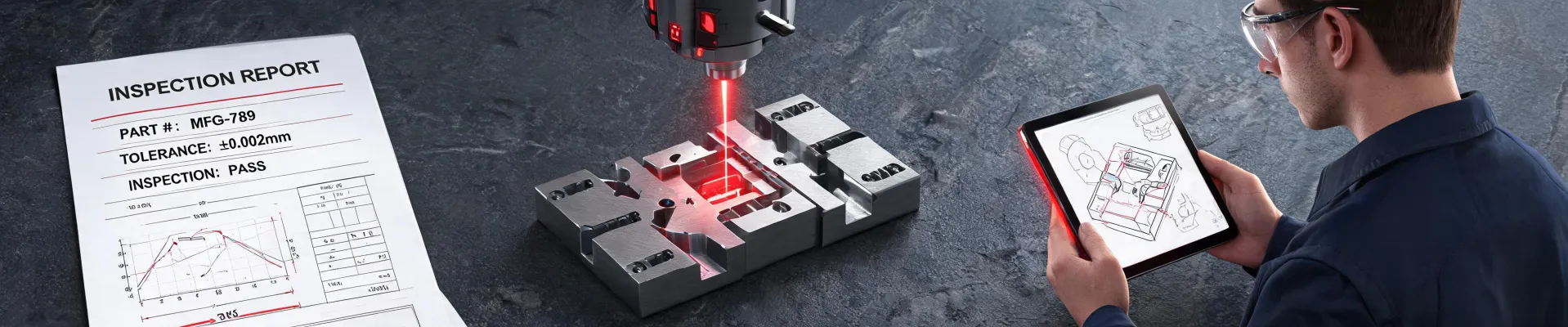
- A beam profiler to verify what you actually received: $5,000–$25,000
- Process gas, assist gas, extraction, and the electricity to feed it all
- Training time, plus the slow first month while your team figures things out
- Preventive maintenance contracts — usually 3–7% of machine cost per year
Most of these become straightforward once you know they exist. The beam profiler is the one I underestimated. Actually, I didn't underestimate it. I didn't know it existed.
Here's why that matters. A laser is a box that turns electricity into light. Sounds simple. But the quality of that light is the difference between a clean cut at 400 inches per minute and a charred edge at 120. The term coherent laser isn't a marketing phrase — it's the physical property that determines how well the beam focuses and holds its shape. If the beam drifts when the machine warms up, or the mode degrades as the optics age, the wattage on the spec sheet is a description of a machine that doesn't exist yet.
That's why Coherent Inc. builds a laser beam profiler product line. Not as a premium accessory. As a measurement tool for the variable that actually determines production performance. Experienced buyers demand a way to verify what they paid for. I didn't understand this until my first machine arrived and the welds looked nothing like the demo.
The same logic applies to the company behind the machine. You're not buying a box. You're buying the engineering that made the box, and the engineering history behind it. If you're evaluating a coherent laser company, check a few things:
- How long have they been building lasers? Coherent has been doing this since 1966. That matters because the thermal and optical lessons from their older product lines feed directly into the newer ones.
- How broad is their portfolio? Coherent spans CO2, fiber, ultrafast, excimer, and DPSS. A company that engineers across all those wavelengths has physics knowledge that a single-product vendor simply doesn't.
- Who trusts them at the OEM level? Trotec builds its laser systems around Coherent sources. Trotec's engineers stake their brand on that source holding up over real production hours — not just a two-minute demo.
Why does this matter? Because beam instability is invisible in a demo and painfully obvious in week three of a deadline. Measured beam quality, thermal management, and a supplier who can talk about M² factors without flinching — that's what separates a machine that makes parts from a machine that makes excuses. At least, that's been my experience in a mid-size fabrication shop. If your world is micro-machining or medical devices, the calculus could shift.
What This Confusion Costs
Let me put real numbers on the mistakes, since I've kept a log anyway. It's the only way I could convince my own team that the new checklist wasn't bureaucracy.
Mistake #1: I bought the sticker price (2017). Lower-cost CO2 machine with a beautiful demo. The demo lasted three minutes. Three minutes doesn't reveal the thermal drift that starts at minute eleven. The first customer batch came back with edges that looked like something chewed them. Rework, new optics, and lost production time added up to $4,700. Then I bought a beam profiler to figure out what my laser was actually doing. The profiler with software was around $9,200 — no, $11,000. I'm mixing it up with another project. Either way, it was a five-figure lesson in measuring before purchasing.
Mistake #2: I trusted "same specifications" (September 2022). I assumed that two lasers with the same wattage would perform the same. Didn't verify. Turned out each vendor's interpretation of the spec sheet was slightly different. The cheaper unit had a decent M² on paper but couldn't hold it past the twenty-minute mark. Same wattage, same assist gas setup, completely different results. That error affected a $3,200 fixture order, plus a three-week delay that made our best customer very unhappy. Direct total: $12,800. Indirect: the kind of credibility dent you can't invoice.
Mistake #3: I compared the wrong things (2023). After the second disappointment, I swung the other way and questioned whether we needed a laser at all. I spent weeks modeling the aluminum injection molding cost for parts we were ordering in batches of 150. (Should mention: yes, we cut aluminum parts — but in low volume.) The injection molding numbers only worked at quantities we'd never reach. Then I scrolled through "best 3D printers for business 2025" guides, wondering if additive was the future. Great machines, genuinely. Not ideal for a mixed workload of sheet cutting and marking. The failure wasn't considering alternatives — it was avoiding the core decision because my first two purchases felt like failures.
Add it all up and the documented damage is around $47,000. Maybe $43,000, I haven't totaled it this quarter. The exact figure matters less than the pattern: every single mistake traced back to asking the wrong question too early.
The Method That Finally Worked
The fix turned out to be short, because the problem was never complexity. It was ignoring what mattered. Three rules now go into every purchase:
- Ask "what's NOT included" before "what's the price." That question has saved me more than any negotiating tactic I've ever tried. The vendor who lists every fee upfront — even if the total looks higher — usually costs less in the end. The quote that hides the chiller, training, installation, and verification tooling isn't a bargain. It's a mystery novel. And in my experience, mysteries end with an unexpected invoice.
- Verify beam quality before accepting delivery. Write a beam profiler into the purchase contract. Measure the M² within the first week. If the number doesn't match the manufacturer's claim, you have documented grounds for rejection. If the vendor hesitates when you mention this, that's a data point too.
- Model the production economics before looking at machines. Start with your parts: material, batch size, required quality, five-year volume. Then match the process. For high-volume aluminum parts, the aluminum injection molding cost per part wins. For complex low-volume prototypes, the best 3D printers for business in 2025 are genuinely worth evaluating. For flexible sheet cutting, marking, and quick changeovers, a CO2 laser system is still hard to beat. The answer depends on the job — not the trend.
This approach works for us because we're a mid-size shop with predictable ordering patterns. If you're a job shop with chaotic demand, or a startup making one product, your outcome will differ. The method shouldn't. Ask the transparent questions first, measure the beam, and let the economics decide.
How much is a co2 laser machine, honestly? Budget the machine price plus 30–50% for everything that makes it work. The machine costs tens of thousands. The beam quality costs more. The wrong assumption costs the most.
Buy the profiler first, choose the company on engineering evidence, and model the job before signing. I paid $47,000 to learn that sequence. If this saves you one mistake, it was worth writing.