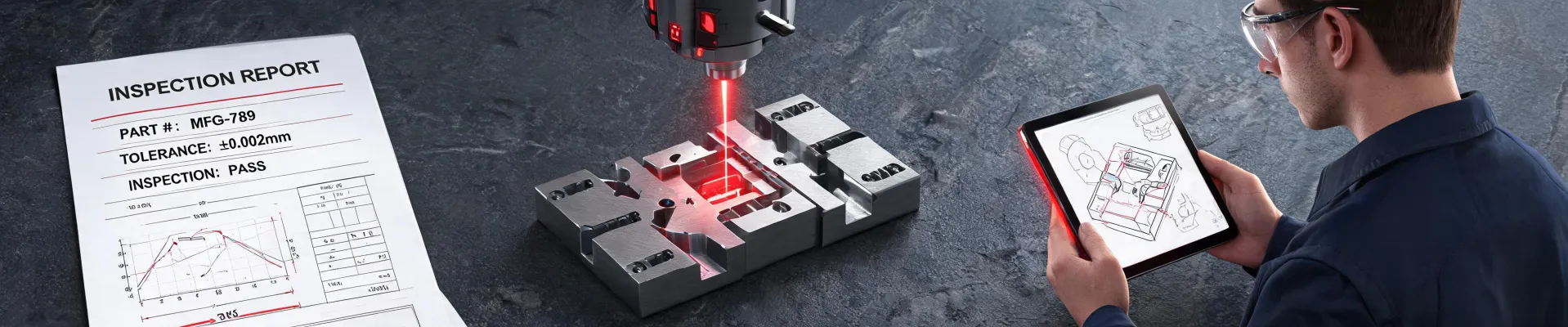
As a quality compliance manager, I review laser systems for a living. Not sales proposals—actual machines, as they're being prepared for customer approval. Roughly 60 systems a year, spanning CO2, fiber, and ultrafast sources. In our Q1 2024 quality audit, 8% of first-pass builds got sent back for rework before they shipped.
I'll say this straight: the way most manufacturers evaluate a laser cutting machine hasn't changed in five years, while the machines themselves have changed completely. That gap is costing buyers real money.
My Position: The Old Buying Checklist Is Outdated
In 2019, comparing laser cutting machines came down to three things: wattage, cutting speed, and price. You got three quotes, compared the specs, picked a number. That worked. Lasers were single-purpose tools. The datasheet told you what you needed to know.
That's not true anymore. What was best practice in 2020 doesn't apply in 2025. And if your evaluation template looks the same as it did back then, you're making buying decisions with an outdated framework.
What Changed, From Where I Sit
1. The Machine You're Buying Is No Longer Single-Purpose
Most of the systems we build use coherent laser sources—the CO2 line for cutting, and increasingly the ultrafast family for the precision work medical and electronics customers ask for. We also spec coherent excimer laser systems when the application demands short-wavelength ablation. The point is, these aren't one-job tools anymore.
A CO2 laser that used to just cut acrylic now also marks parts with different optics and settings. Fiber lasers changed the speed conversation entirely, especially on thin sheet metal. Ultrafast lasers opened up processes that most buyers never had on their requirements list when they wrote it.
The problem: the typical "how much is a laser cutting machine" comparison still looks at one application, one speed, one power rating. It forces a comparison that doesn't reflect how the machine will actually be used. Over the last four years, we've had two customers come back asking for marking capability on machines they'd ordered as dedicated cutters. Both were told during the sales process that marking was possible. Neither asked to verify it in the acceptance protocol. Both paid for additional optics within the first year.
2. Beam Quality Predicts Performance Better Than Peak Power
Here's the counter-intuitive one. When I compare acceptance data for coherent excimer laser systems and other precision sources, the spec that predicts part quality isn't peak power. It's beam quality and stability over a production shift.
A laser with poor beam stability burns more power to deliver worse results: slower cuts, rougher edges, more dross, more rework. That difference rarely shows up on the brochure, but it shows up in your scrap rate and your weekend overtime.
Back in 2019, beam quality mattered mainly for specialty applications like semiconductor fabrication. Now, with tighter tolerances across medical devices, consumer electronics, and automotive components, it's a baseline factor.
I'm not a laser physicist, so I can't speak to how each manufacturer designs for beam stability. What I can tell you from a quality acceptance perspective is that two lasers with identical wattage ratings can produce visibly different parts. Last year we ran an internal blind test: five operators, two lasers with the same spec sheet, 20 test pieces each. All five picked the same machine as having cleaner cuts—without knowing which one they were evaluating. The difference wasn't power. It was edge consistency across the whole run.
3. Total Cost Has Changed Shape
Sticker price used to be a decent proxy for total cost. Not anymore. The spread between budget and premium fiber systems has widened, and the gap is about more than features.
I want to say the price range on comparable configurations was about 40% in late 2024, but don't quote me on that exact figure. The pattern is consistent though: the cheapest quotes and the most expensive ones differ in what sits behind the price—support response times, spare parts availability, calibration intervals, training quality.
The numbers said go with the budget vendor on an internal tooling purchase last year. Fifteen percent cheaper, similar specs on paper. My gut said no. We went with our gut and paid more. Six months later, two shops we know that chose the budget option were dealing with support delays that production had to work around. The cheap option stopped being cheap once downtime entered the equation.
The Same Shift Shows Up in Other Manufacturing Services
This isn't just a laser problem. The same outdated logic appears when manufacturers evaluate CNC machining components service partners and rapid injection molding suppliers.
Last year we received 5,000 machined components where a critical dimension was off—0.003 inches against our 0.001-inch spec. The vendor claimed it was "within industry standard." It wasn't. We rejected the batch, and they redid it at their cost. But we still lost five weeks and $18,000 in related delays. (Should mention: they were the cheapest quote and had passed a basic capabilities review. Nobody verified real process capability.)
Now every contract we issue—for lasers, for machined parts, for rapid injection molding suppliers—includes explicit acceptance criteria. Not just "meets spec," but how the spec will be verified, on which measurement equipment, and by whom.
Everyone told me to verify specifications before approving a vendor. I only believed it after skipping that step once and eating the mistake.
Reasonable Objections
"Our parts are simple. We don't need beam quality specs." Maybe. If you're cutting 10mm structural steel with wide tolerances, high-end stability figures won't decide the purchase. But you still need to verify that the machine holds its performance over time, not just on the day of installation. Acceptance testing isn't about buying the most advanced system. It's about confirming the one you're paying for does what the datasheet claims.
"We need the lowest quote to win our own bids." I hear this a lot. But a slightly higher upfront cost on a laser cutting machine is usually cheaper than rework, scrap, and downtime from a marginal system. Run the total cost model with your actual labor rates and material costs, not the brochure numbers. Sometimes the budget quote wins. Just make the call on data, not on the invoice.
This approach works for us because we're a mid-size integrator with repeat customers. If you're a job shop doing one-off work with a different material every week, your calculus is different. I can only speak to what I've seen.
Bottom Line
The industry moved. The old evaluation playbook didn't keep up. The fundamentals haven't changed—you still need to verify specs, check references, and know your applications. But the things worth verifying have evolved: multi-application capability, beam stability, service responsiveness, and lifetime cost instead of sticker price.
So when someone asks me "how much is a laser cutting machine," I hear a five-year-old question. The better question is, "what does the acceptance protocol look like, and will this machine hold up across the applications we actually run?" Ask that, and the price question tends to answer itself.
What was best practice in 2020 may not apply in 2025. The fundamentals haven't changed, but the execution has transformed. Update how you buy.