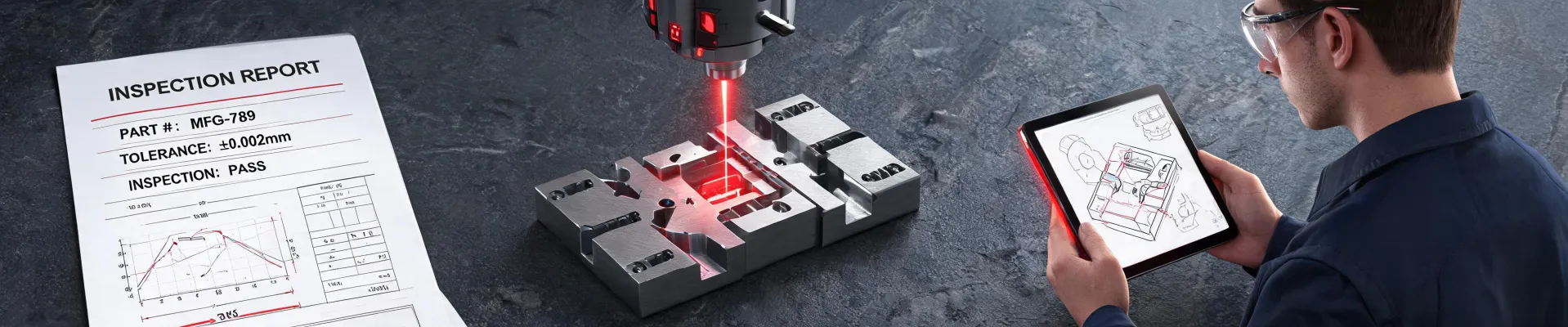
When someone asks me to compare laser processing with CNC milling, I ask what the drawing looks like at 7 a.m. on the day the job has to ship. That sounds like an operations answer rather than an applications answer, but after years of qualifying industrial laser processes for manufacturers, I have learned that the machine is rarely the bottleneck. The bottleneck is certainty: whether the process can hold the tolerance and whether the supplier can prove it before the deadline arrives.
In my role coordinating process development and urgent orders for laser cutting, welding, and marking, I have watched the laser-versus-mill argument spin in circles. The two processes overlap less than people think. The real separation happens in fixturing, tolerance callouts, and the waste plan. This comparison covers four dimensions: geometry and material, precision, lead-time certainty, and waste handling.
Why Recent Coherent Laser News Matters
Most of the coherent laser news that matters to production managers in 2025 points to one architecture: a coherent beam combining fiber laser array. The idea is simple. Instead of pulling all of the power from a single fiber amplifier, you phase-lock several amplifiers so their outputs add together in one clean beam. That gives high average power without giving up beam quality, which is usually the trade-off that prevents a laser from cutting thick material faster.
For a job shop, a coherent beam combining fiber laser array means deeper welds and cleaner full-penetration cuts at a lower cost per part. It does not make CNC milling obsolete. It moves the crossover point where a laser becomes the better production choice.
Dimension 1: Geometry and Material
CNC milling is subtractive and excellent where a rotating tool can reach. It wins for prismatic parts, mold inserts, housings with bores, brackets with threaded holes, and large parts that are easiest to machine from a solid block. The limitations are tool reach, tool deflection, and the risk that comes from holding a tight feature after the part has been flipped and re-fixtured.
Laser processing is also subtractive, but it does not rely on tool force. Heat or ablation removes material along a focused beam path. That makes it possible to process thin walls, heat-sensitive structures, tiny slots, and complex two-dimensional profiles. The same laser can often switch between cutting, welding, and marking when the process head and parameters change.
If a customer is evaluating injection molding for plastic flooring, the decision starts with volume. At 10 units, CNC milling or additive manufacturing makes sense. At 100,000 units, injection molding is likely the right production process. But the mold cavity itself will probably be CNC machined first, and if the floor design needs texture, an ultrafast laser can pattern the mold cavity before the first shot. In that workflow, the mill and the laser are not competitors; they are both suppliers to the molding press.
Dimension 2: Precision Needs a Reference Frame
Precision is the most abused word in this conversation. When someone says a CNC milling precision wholesaler holds plus or minus 0.005 mm, the real question is which feature is being measured. A short, rigid bore can hold that number. A deep thin wall may not, because tool deflection and thermal growth change the effective cut. A laser is different: the motion stage can be very repeatable, but the kerf width and heat-affected zone depend on focus, assist gas, material absorption, and speed. Both processes are precise; neither is precise in every direction on every feature.
Earlier this year, I qualified a part with a 10 mm deep slot, 0.4 mm wide, in hardened steel. No reasonable end mill could cut that slot without deflection. A laser ablation process produced it cleanly. A week later, a different part needed a precision bore with a perpendicularity callout; the right answer was a mill and a reamer, not a laser. The first rule is not about which technology claims better accuracy. It is about which one can hold the geometry in that material.
Dimension 3: Lead Time and the Price of Certainty
Lead-time certainty is less glamorous than raw cutting speed, but it pays the bills. In urgent work, speed and reliability are different products. Last quarter alone, I reviewed 47 rush orders, and the common thread was not laser versus mill. It was the existence of process data and a confirmed machine slot.
In March 2024, with 36 hours before a customer line restart, a CNC shop quoted $2,100 and said the parts would probably arrive around Thursday. A laser processing shop quoted $2,500 with a confirmed delivery hour. I signed the second quote. The extra $400 was not a payment for speed. It was payment for a guaranteed slot in the production schedule, plus a process that had already been run on similar material. The alternative was a $50,000 penalty clause and the loss of a client relationship.
That is the part that gets missed when buyers compare hourly rates. A lower quote is not lower if it creates an extra inspection trip, a late-night rework, or a missed deadline. Rush fees buy certainty, and certainty is worth more when the failure cost is high.
Dimension 4: How to Dispose of Laser Welding Waste
Waste is the quiet differentiator. CNC chips are easy to identify, can usually be dried and recycled, and have residual scrap value. Coolant needs maintenance, but the waste stream is relatively straightforward. Laser welding waste is different. It includes fume, fine dust, spatter, and spent filtration media, and the right disposal route depends on the material being welded.
How to dispose of laser welding waste has one honest answer: characterize it before you dispose of it. Have a sample of the filter dust analyzed after a representative production run. Plain steel is not the same as galvanized material, stainless steel, or nickel alloys. The laboratory results will tell you which disposal rules apply, and local environmental regulations will tell you how to handle the material. If an outside laser service does the welding, ask for their waste profile as part of the quotation. That paperwork is as important as the weld inspection report.
Buyers who ignore this dimension often discover it later as an expensive surprise. The price of a laser cutting or welding system is not the full cost of ownership. Extraction equipment, filter changes, waste testing, and disposal logistics need to be in the comparison from day one.
Which One Do I Recommend?
- Choose CNC milling when the part is prismatic, has threaded holes, is machined from a solid block, or has features that only a rotating tool can create. That is the route for mold inserts, housings, and precision brackets.
- Choose laser processing when the part is a sheet-metal profile, thin wall, small slot, or heat-sensitive geometry where tool force becomes a problem. If the same machine can cut one job and weld the next, the setup savings are real.
- Choose injection molding when volume justifies the tool. For plastic flooring parts, the mold usually needs CNC machining first, and laser texturing may provide the final surface detail before the molding press takes over.
- Choose a supplier with a guaranteed machine slot and documented process data when the deadline is hard. Pay for certainty before paying for raw speed.
In the end, I do not choose a process. I choose a process with evidence. A CNC milling shop with a solid fixture and an honest lead time can beat a flashy laser statement. A laser shop with a validated program and an extraction plan can beat a lower CNC bid that sounds too good to be true. The question is not whether coherent laser technology is impressive. It is whether the supplier can show you the process data and guarantee the hour the work will be done.