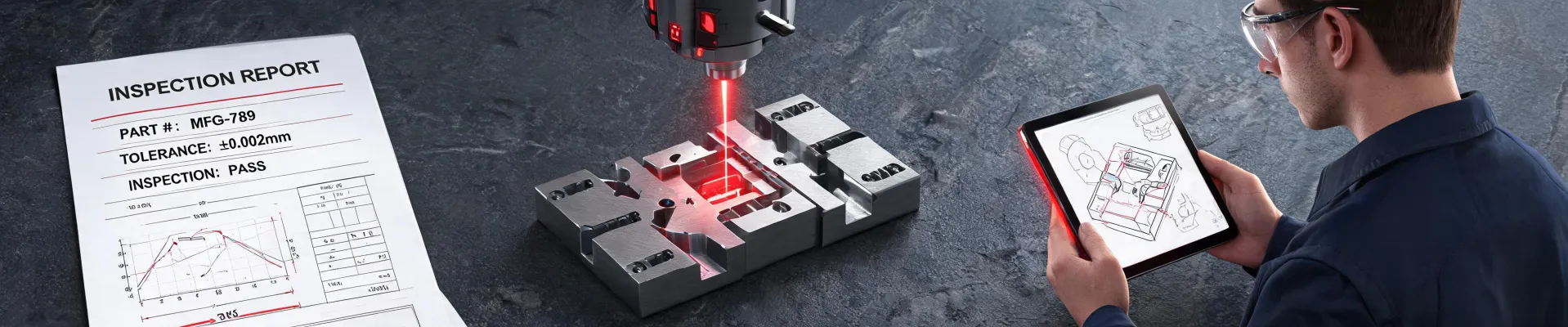
I'll never forget getting the call at 2 PM on a Friday. A client's production line for medical device components had just lost its primary laser source—a 20W CO₂ system that finally gave out after eight years. They needed a replacement Coherent laser system to maintain their FDA-cleared manufacturing process. The window? 96 hours until the next shift started.
Scenarios like this are why I'm writing this. There's no one-size-fits-all answer to "how fast can I get an industrial laser system?" because the answer depends entirely on your specific situation. I'm going to break down the three most common rush scenarios I've encountered in my years handling emergency procurement, and give you the playbook for each.
Before We Start: The Three Scenarios
Based on my experience handling over 300 rush orders (I've tracked them in a spreadsheet since 2021, it's kinda my thing), rush laser system procurement generally falls into one of three buckets:
Scenario A: The Production Line Down — You need a replacement now. Your current system is dead, your line is stopped, and you're losing money by the hour. Timeframe: 24-96 hours.
Scenario B: The Tight Deadline New Project — You've got a new project awarded, the first prototype is due in two weeks, but you haven't secured the laser system yet. Timeframe: 1-4 weeks.
Scenario C: The Budget-Driven Rush — You have time (4-8 weeks) but a firm budget. The question isn't speed; it's getting the right specification without blowing the budget.
Each scenario requires a completely different approach. Let me walk you through them.
Scenario A: The Production Line Down (24-96 Hours)
This is the one that keeps me up at night. In March 2024, I had a client who needed a Coherent laser beam profiler for a government contract validation the next morning. Their normal profiler had failed a calibration check at 3 PM.
Here's the reality: You're not getting a fully customized, turnkey solution in 48 hours. What you can get is a standard, off-the-shelf system from a supplier with stock and a willingness to expedite.
What works:
- Check stock availability first, ask about price second. In my role coordinating emergency acquisitions, I call or email and ask: "Do you have a [Model X] in stock that can ship today?" If yes, we talk pricing. If no, I move to the next vendor. Don't waste time on detailed quotes when you can't even get the product.
- Accept a slightly different configuration. Your ideal spec might be a 50W CO₂ laser, but if the supplier has a 60W CO₂ laser with the same beam profile, it's probably a better bet than waiting 3 weeks for the exact model.
- Budget for expedited shipping and support. Last year, a client paid $1,200 for overnight freight on a $45,000 fiber laser system. They were upset about it until I pointed out the production line downtime was costing $8,000 per hour. The math works.
What doesn't work: Trying to negotiate a volume discount. This is not the time. And don't ask for custom modifications. For one client who insisted on a custom mounting bracket, the lead time jumped from 2 days to 14 days. They lost the production window.
I only believed this after ignoring it. In 2023, I spent 6 hours trying to negotiate a 5% discount on a rush system. The client lost the entire production window. The savings? Less than what we paid in overtime for the production rescheduling.
Brand-Specific Insight: Where Does Coherent Fit?
Coherent's strength here is their broad portfolio—they've got CO₂, fiber, and ultrafast systems. If you're looking for a replacement for a system from an OEM that uses a Coherent source (like Trotec), that's a strong advantage. Their beam quality and stability specs are something I can trust without re-verifying. But I'd still call their distributor or a Coherent-authorized integrator directly to confirm stock. In my experience, the "standard lead time" on their website is rarely accurate for rush orders.
Scenario B: The Tight Deadline New Project (1-4 Weeks)
This is the most common scenario I deal with. A project gets approved, the timeline is aggressive, and procurement is the bottleneck. In Q1 2024 alone, I had 14 clients in this exact position.
You have more breathing room than Scenario A, but not enough for the standard procurement cycle. Here's the key difference: you can now consider modest customization, but you need to be strategic.
What works:
- Get a quote with and without expedite fees. The difference between a 3-week lead time and a 1-week lead time is often a percentage premium (10-20% is common). Ask for both options. In my experience, once you see the two numbers side-by-side, the decision is often easier.
- Ask about partial shipments. Can they ship the laser source in week 1 and the controller/chiller in week 2? If you can start integration work, you save days. I did this for a client in May 2024 and we saved 6 calendar days.
- Use a pre-engineered platform. Coherent's standard platform systems (like the DIAMOND series for cutting or the StarFiber series for welding) are designed for faster integration. Custom solutions take longer, period.
But here's where the FTC's guidance on advertising claims becomes relevant. I've seen suppliers quote a 2-week lead time for a "standard" system, only to reveal later that the configuration the client actually needs requires 5 weeks. I've learned to ask: "What's NOT included in that 2-week lead time?" The vendor who lists all lead time components upfront—even if the total looks higher—is usually faster in the end.
To be fair, it's not always intentional deception. One supplier told me they quoted the lead time for the "base system" forgetting to factor in the custom chiller. The client was furious, but we sorted it out with a rush chiller from another vendor.
Scenario C: The Budget-Driven Rush (4-8 Weeks)
This scenario is a trap for the unwary. You have time, but you're pressured on budget. The temptation is to go with the cheapest quote and hope for the best. I've made this mistake.
One of my biggest regrets: in 2022, I went with a discount laser integrator for a client's marking application. The quote was 35% lower than the next vendor. But the system arrived without the correct software license (an extra $2,200) and the beam delivery optics weren't compatible with their workholding (another $4,500 and 2 weeks of downtime). The total was higher than just going with the established supplier from the start.
What works for budget-driven rushes:
- Use the 4-8 weeks to get a truly transparent quote. I now ask every supplier for a line-item breakdown: laser source, optics, chiller, shipping, installation support, training, software. If a supplier balks at this, that's a red flag. The FTC calls this substantiation—being able to show what's included. It's good practice for everyone.
- Consider reconditioned or demo units. Some vendors (including Coherent and their authorized partners) sell certified pre-owned systems with warranties. These can save 20-40% and the lead time is often weeks shorter. The catch? You can't specify the exact configuration. But if the spec is close enough, it's worth it.
- Check on consumables and support costs. A laser system is like a printer—the hardware is one piece, but the toner (consumables) and maintenance are the ongoing cost. Ask about laser gas (for CO₂), diode lifetime, and service intervals. A system that's $10,000 cheaper but has $3,000/year in higher consumable costs is actually more expensive over 3 years.
There's something satisfying about finding a deal without sacrificing reliability. After the pain of the 2022 discount integrator mistake, I finally felt I'd cracked the code when I helped a client get a certified pre-owned Coherent 30W fiber laser for 60% of new cost, with a 1-year warranty. The client got their budget, and I got to sleep at night.
How Do You Figure Out Which Scenario You're In?
This isn't just an academic exercise. I've had clients tell me they're in Scenario A (urgent) when they're actually in Scenario C (budget-driven) and about to waste money on expedite fees they don't need. Here's my cheat sheet:
- If downtime costs exceed $1,000/hour: You're in Scenario A. Prioritize speed. The cost of the rush is cheaper than the cost of waiting.
- If you have a hard technical requirement that can't be deviated from: You're likely in Scenario B or C. Don't force Scenario A tactics—you'll end up with the wrong system.
- If your CFO has said "you will not go over budget by a dollar": You're in Scenario C. Use the extra weeks to find the best value and get everything in writing.
And one final thing: I still kick myself for a time in 2023 when I didn't push a client to correctly identify their scenario. They thought they were in a budget rush (Scenario C) but had an undisclosed production deadline that made it a true Scenario B. The system arrived two days late because we hadn't paid for expedite. The client missed their milestone. We learned: always ask about the real, binding deadline—not just the "preferred" one.
I hope this helps you make your next laser system purchase faster, cheaper, or (ideally) both. If you're in the middle of a rush right now—good luck. I've been there, and I promise, with the right approach, it can work out.
Pricing disclaimer: All price ranges cited are based on my experience with US-based distributors (Q3 2024 onward). Current pricing may vary. Always verify with your supplier.