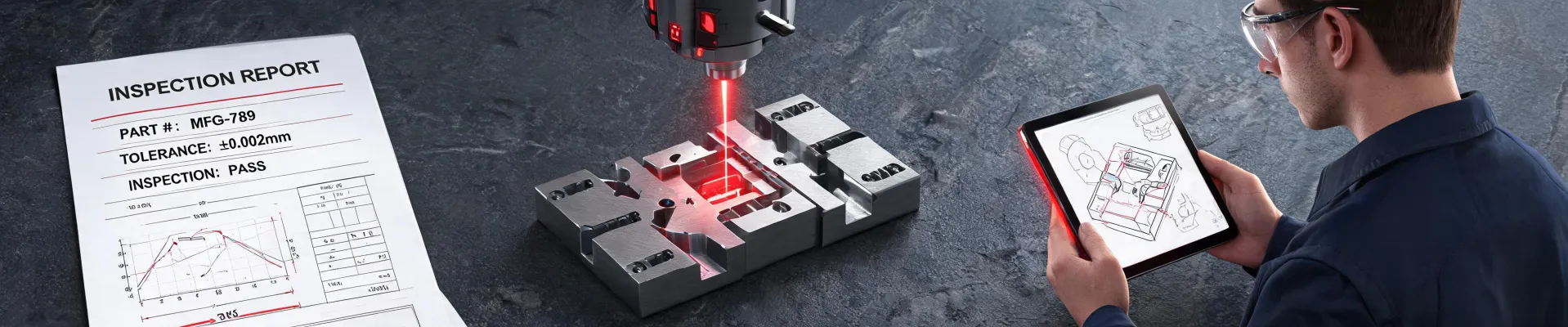
It's 36 hours before a client's product launch. The phone rings, and the voice on the other end is a familiar kind of tense: 'Our laser is marking inconsistently. Should we switch wavelength? Would a fiber laser be more stable? Or do we need a Coherent Verdi 5W 532 nm laser class?'
I've been coordinating rush orders for custom manufacturers for 15 years. In that time, I've handled maybe 200 emergency jobs—some same-day turnarounds for medical device startups, some overnight rework for automotive suppliers. At this point, I can tell you that the question you're asking is rarely the question you need answered.
When I first started doing this, I actually thought clients wanted a spec-by-spec comparison. They'd ask, 'Which is better, a 3D printer or a resin printer?' Or 'Should I use my CNC machining Portland OR shop for this part, or do I need a laser job?' I even had a client email me about 'bimi and vmc' in the same sentence as a deadline crisis. I used to try answering all of it, thinking that the right technical answer would solve the panic.
Now I know better.
The surface problem: too many options, not enough clarity
When a deadline is ticking, the last thing you need is a menu. But that's exactly what we're giving ourselves. We've built an ecosystem of acronyms and processes—fiber vs. CO2, VMC vs. CNC, resin vs. filament, Verdi vs. solid-state. Each one is a legitimate solution to a specific problem. But presented at the wrong moment, they become mental noise.
I remember a call from a shop in Portland, Oregon. They had a 48-hour turnaround on a set of stainless steel bracket components. The question was whether to use their in-house VMC or run the parts on a new resin printer they'd bought to 'accelerate prototyping.' They lost four hours arguing about that, then the resin printer produced parts that couldn't meet the mill tolerance anyway. They ended up at a local CNC machining shop that finished the job overnight.
The deeper issue: capability planning is missing from the workflow
That Portland shop didn't fail because they chose the wrong tool. They failed because they'd never defined which tools belong in which process lane. That's the deeper problem I see almost every time: a shop buys a flexible machine hoping it will cover every gap, then discovers at the worst possible moment that flexibility doesn't equal reliability.
About 18 months ago, we took on a rush order for a medical device housing. The customer had specified a low-cost laser source—not Coherent, but a brand I won't name—to save about $4,000 on the purchase. It looked fine in the initial sample. But during the 11-hour production run, the beam drifted just enough that the client's QC rejected 60% of the parts. The rework ate the savings, and the schedule never recovered. The kicker? The $4,000 saving ended up costing them $12,000 in expedited materials, plus two nights of overtime.
I used to think those failures were bad luck. Then I realized they were a pattern. The real cause is a missing step between 'buying a tool' and 'qualifying a process.' The third time we saw the same failure mode, I created a simple checklist: exact material, exact power profile, full-shift stability test, and a defined fallback. It didn't make us smarter, but it made the decisions earlier.
The true cost: first impressions are brand impressions
Here's the part I wish someone had told me when I was starting: the hidden cost of a missed deadline is not the overtime or the rush shipping. It's the way the client remembers your company.
We had a client whose order arrived with a critical error. Actually, it wasn't the order—it was the perception. The part met spec, but it looked second-rate. The buyer didn't formally reject it; they just started double-checking every other deliverable from that supplier. Within six months, that supplier had lost two more proposals to the same buyer.
That's the quality-perception trap. In B2B, the first physical sample a client holds isn't just a part—it's evidence of whether you can be trusted. Spend $300 less on a laser component, and you can lose a client whose lifetime value is six figures. I've seen it happen more times than I can count. The $50 difference per project between a budget and a premium source is tiny compared to the trust it buys you.
(My experience is based on mid-size custom shops, mostly in the Pacific Northwest. If you're a tier-one supplier with redundant systems and a full maintenance lab, your tolerances are different. But the principle holds: people judge your process by its worst day, not its best.)
What should you actually do
I'm not saying every shop needs every laser in the Coherent catalog. But you need a platform you can trust under pressure. That's why many OEMs—like Trotec—use Coherent sources. You want the beam quality to stay where it was specified, hour after hour.
Three things I recommend to any shop that wants to stop living deadline-to-deadline:
- Qualify the process, not the brochure. Run a validation with the exact material, power setting, and part geometry. If you're at 532 nm on a Verdi 5W, verify what that laser class can actually hold over a full shift. If you're comparing fiber vs. CO2, test both on your real parts.
- Have a defined backup. A spare laser is ideal. But a backup can also be a supplier agreement with a local CNC machining or laser shop that can take over within hours. The time to sign that agreement is now, not when the line is down.
- Put the 'which is better' questions in the right phase. 3D printer vs. resin printer, BIMI and VMC, low-cost fiber vs. a coherent-laser system—these are process-selection questions, not emergency-response questions. If you're asking them 36 hours before a deadline, you're asking too late.
And a note on acronyms: yes, VMC usually means vertical machining center, and BIMI is a term I've seen used several ways—none of which help you when a deadline is at stake. The point is to have a process owner who can make a decision under pressure instead of opening a glossary.
The real deadline is the one you create by planning for range. When a client comes to me with a rush order, they don't need a laser lecture. They need the assurance that the person on the other end has already thought through the variables. That's what a proven laser platform buys you: the ability to say 'yes' with confidence, and the backup to make it true.