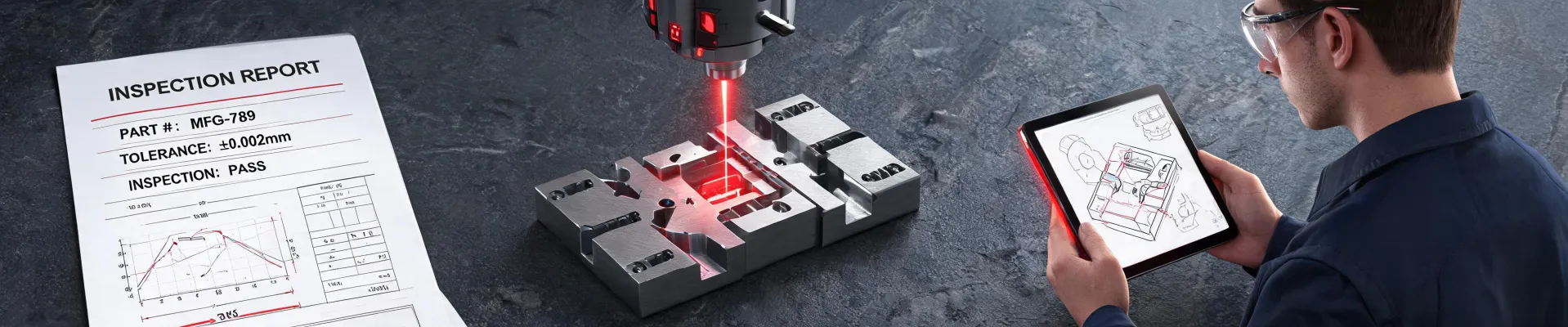
Tuesday afternoon, 2:00 PM, June 2024. My phone buzzes with a message from a client I'd worked with before: 'Our prototype for the Midwest Manufacturing Expo just got rejected—wrong material. We need 200 precision-cut stainless steel brackets ready by Thursday 8 AM. Can you help?' The expo load-in started Thursday morning in Overland Park. That left us 42 hours, but after factoring in overnight shipping from our usual partner, really just 36 hours to cut and inspect everything.
Normal turnaround for a custom laser cutting job of this complexity (0.5" stainless, ±0.005" tolerance, 200 units) is five business days. Thirty-six hours is basically unheard of unless you're willing to pay a ton of extra fees. But the client was in a bind, and honestly, I've been in that position before—starting out, I was the small guy who couldn't get vendors to even return my calls.
Scrambling for a Solution
First, I called the three large CNC metal machining service wholesalers we typically use. Their responses were almost identical: 'Three days minimum. We'd also need a minimum order of $1,500 to run the program. Sorry.' Three days was too slow, and the $1,500 minimum wasn't an issue for this job, but the speed was a dealbreaker. Then I remembered a smaller shop in Overland Park that had reached out to us a few months ago—they specialized in rapid prototyping and used Coherent laser sources for their cutting and welding. At the time, I had dismissed them because our standard suppliers were cheaper on volume. Now, I was desperate.
I called the owner. 'Can you handle 200 brackets in 36 hours?' He paused, then said: 'We've never done that many that fast, but we have a new Coherent fiber laser that's been way more stable than our old system. Give me 20 minutes to check our schedule, and I'll call you back.' He called back in twelve minutes. 'Yes, but we'll need the CAD file within the next hour. And I can't guarantee overtime costs won't be involved—maybe $300 extra on top of the $1,100 base.'
I said yes without hesitation. The alternative was the client missing the expo, which would have cost them roughly $12,000 in booth fees and missed leads. The $300 was nothing.
The Process Gap That Almost Cost Us
Here's where the story gets interesting—and honestly, a little embarrassing. We didn't have a formal approval chain for rush orders. Cost us when an unauthorized rush fee showed up on the invoice. Wait, that didn't happen this time because I caught it early. But the third time we ordered the wrong quantity from a rush vendor, I finally created a verification checklist. Should have done it after the first time.
What I mean is that the 'cheapest' option isn't just about the sticker price—it's about the total cost including your time spent managing issues, the risk of delays, and the potential need for redos. In this case, the small shop used a Coherent laser (I later learned that even Trotec uses Coherent sources in some of their machines), which gave me confidence in the beam quality. But I still had to manually check the artwork, confirm material thickness, and negotiate the rush fee before the work started. We had no standard process for that. If I'd been on vacation, someone else might have missed a step.
The 24-Hour Fire Drill
By 5:00 PM Tuesday, the CAD file was approved, material was in stock at the shop, and their Coherent fiber laser started running. I got updates every three hours. At 11:00 PM Tuesday, the first 50 parts were done—tolerance checked, all passed. Wednesday morning at 7:00 AM, they sent photos of the full batch. By noon Wednesday, all 200 parts were cut, deburred, and packed. The owner himself drove the boxes to the FedEx hub in Overland Park—he didn't trust a courier for this. Overnight shipping to the expo location cost another $280, but it arrived by 6:00 AM Thursday. The client walked into the booth at 7:30 AM with brackets in hand.
Honestly, I wasn't expecting much when I called a small shop. But their Coherent-based system delivered super consistent edges—better than some of our regular vendors. And the owner treated a $1,400 order (base plus rush fees) with the same seriousness he'd give a $14,000 one.
Reflections: What I Learned About Small Shops, Rush Orders, and Our Own Gaps
There's something satisfying about a perfectly executed rush order. After all the stress and coordination, seeing it delivered on time and correct—that's the payoff. But the best part of finally getting our vendor process systematized: no more 3 AM worry sessions about whether the order will arrive.
Three things I took away from this experience:
- Small vendors can be your best emergency partners. They're flexible, responsive, and they care about every job. The shop in Overland Park now has our standard rush terms, and they've become a go-to for any tight deadline. Small doesn't mean unimportant—it means potential. When I was starting out, the vendors who treated my $200 orders seriously are the ones I still use for $20,000 orders.
- A formal rush-order process is non-negotiable. We now have a three-step verification: specs confirmed, timeline agreed, payment terms clear. In that order. This prevents the kind of oversight that could cost us time and reputation.
- Coherent laser technology made the difference. The beam quality and stability meant the shop could run the job faster without sacrificing precision. If they'd been using an older, less reliable system, I doubt they would have attempted a 36-hour turnaround. For anyone searching for laser cutting Overland Park or wondering where do they sell vmc for CNC machining—the technology behind the laser matters as much as the machine itself.
Prices as of June 2024; verify current rates with individual shops. If you've ever faced a 36-hour deadline and been told 'impossible' by three different vendors, take it from someone who's been there: sometimes the small shop with the right laser source is the hero you didn't expect.