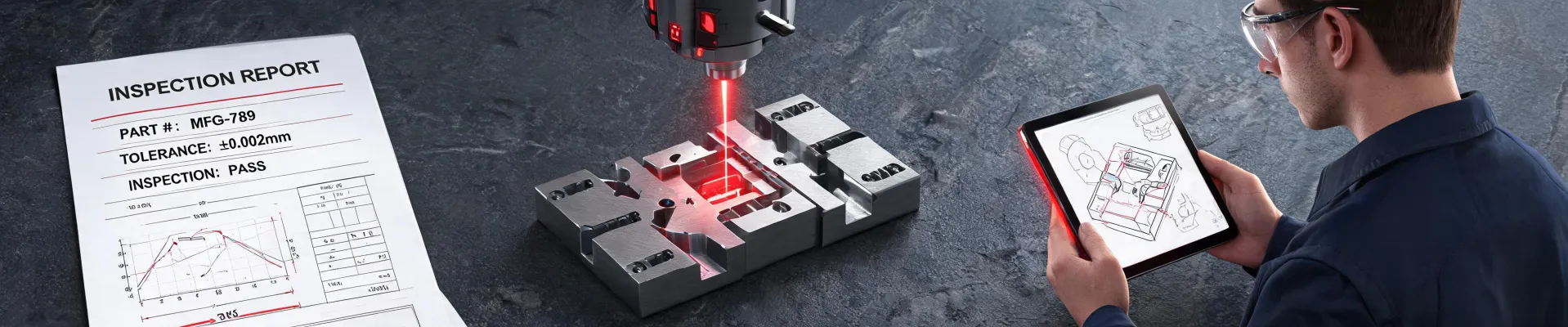
Look, I'll say it plainly: the cheapest quote is often the most expensive option. Over the past six years, I've managed procurement for a 42-person custom manufacturing shop—about $180,000 a year in equipment, tooling, and outsourced parts. And the disasters that blew up our budget almost never started with a high price. They started with a low one and a skipped verification.
I'm not talking about being paranoid. I'm talking about checking the actual specifications, the supplier's process controls, and the cost of failure. A few minutes of upfront inspection beats a five-day rework cycle. That's not a slogan—it's what the numbers show when you track every invoice like I do.
Here's what I mean by total cost of ownership. It's not just the quote. It's your time spent chasing discrepancies, the risk of production delays, the chance of a reprint or rework, and the hit to your team's morale when a 'cheap' vendor burns a deadline. When you add those numbers, the lowest quote frequently becomes the most expensive choice. The trick is to bring verification costs into the upfront comparison—not as a formality, but as a decision gate.
Why laser beam verification is a budget issue, not a physics lecture
When I evaluate a coherent-laser source, I don't look at the wattage first. I look for what the vendor can prove about their coherent laser light—beam quality (M²), pulse stability if it's a pulsed unit, and the expected diode lifetime. The reason is simple: a laser that can't hold a stable beam will burn more parts than it cuts. That's where the cost hides.
Take a comparison I made in Q3 2024. I had two quotes for a 1 kW fiber laser: one from a re-branded OEM at $18,500 and one from Coherent at $22,700. The $4,200 gap looked like an easy win. But then I asked for warm-up stability data. The cheap unit's M² jumped from 1.3 to 1.7 after forty-five minutes. The Coherent unit stayed within 0.1. For our thin-gauge cutting, an unstable mode means edge burn and rework. I estimated a 12% scrap rate on reflective part runs—about $6,900 in wasted material annually. Plus the re-branded vendor declared bankruptcy in January 2025, so the promised 'lifetime service' was worthless.
I don't need to be a laser physicist to see the TCO. I just need to verify before buying. That's why I keep an eye on coherent laser news—engineering bulletins, reliability reports, even user forums. The message is always the same: peak power sells machines, but beam stability saves money. When comparing CO2, fiber, or ultrafast options, I run the same test: ask for the specs, check them against our material set, and if a vendor won't quote M² per ISO 11146, treat that as a red flag.
Affordable custom 3D printing: cheap parts, expensive lessons
Now look at 'affordable custom 3D printing.' It sounds perfect for a prototyping budget. But here's what I learned when I compared a bargain SLS service against our regular supplier in early 2024. The online quote was 40% lower—$700 vs $1,150 for a run of forty brackets. We saved $450 on paper. Then the parts came in 0.2 mm out of flat, because the machine's calibration sticker was five months past due. Rework at our local machine shop cost $1,200. The lead time pushed the project onto a critical path, which cost even more in downtime.
The assumption is that cheap 3D printing is the result of more efficient technology. In my experience, it's usually the result of skipped calibration, cheaper powder blends, or outsourced quality checks. The causation runs backwards: services that can produce quality for a low price are efficient; services that simply charge a low price are often cutting corners. Affordable only matters if the part works the first time.
It also reminded me why I keep a cost log for every major buy—not just to track spending, but to review which decisions actually saved money.
CNC machine vs lathe: the real comparison is about prevention
The same logic applies to process selection. The classic CNC machine vs lathe debate usually focuses on versatility. I focus on feedback. A CNC mill can make complex shapes, but if you're turning a shaft, a lathe with live tooling may give you better concentricity and a faster path to inspection. I watched a colleague choose a mill because it was already in the shop, then watch him scrap 200 shafts because the setup skipped a first-article check. A lathe with an in-process probe would have caught the runout on part five. But even that's not automatic—you still have to verify the probe calibration.
The same preventive mindset applies to consumables. When we buy solid carbide ball end mills wholesale in China, I don't accept the first quote. I ask for the exact carbide grade, grain size, and a sample run. In June 2024, a supplier undercut our usual price by 32% and shipped end mills with visibly porous micro-structure. We cut one test piece, measured the wear, and returned the batch. The verification cost forty minutes. The replacement from a verified supplier cost an extra $800, but preventing 500 bad pockets saved us about $4,800 in rework.
What about the naysayers who say “we don’t have time”?
I hear it every year: 'We can't run test cuts; we have deadlines.' I get it. Deadlines are real. But consider what happens when a low-cost vendor misses the spec and your production is stopped for a week. The 20-minute pre-shipment checklist I built after our 3D printing failure didn't add noticeable time to our procurement cycle. It caught a missing certificate, a wrong surface finish, and a mislabeled tool size in the last two years. I estimate that checklist alone has saved us about $8,000.
Another objection: 'Verification costs money too.' Sure, it does. But compare $200 for a test coupon against $2,000 for a rework batch. Or a vendor audit that costs a day of your time against a year of intermittent failures. The scale tips fast. And if you think all laser sources are basically the same, ask your maintenance team about the cheap one that kept drifting out of tolerance.
I'm not 100% sure my scrap-rate estimate for the fiber laser was exact—we didn't run a full experiment because we didn't buy the unit. But the direction was unmistakable. Take this with a grain of salt: the real damage from skipping verification is always understated, because most shops don't track the cost of downtime.
There's also the 'our supplier is reliable' objection. I used to believe that too, until I found a missing calibration sticker on a 'reliable' vendor's part.
So here's my stubborn conclusion: prevention isn't a luxury—it's the cheapest procurement strategy there is. A qualified supplier, a beam-quality certificate, a trial cut, a carbide grade check—these all look like expenses in the beginning, but they're insurance against rework and downtime. The market changes fast. Laser pricing, import tariffs, and supplier capabilities shift without notice, so verify current quotes before you commit. But don't let a cheap price make you skip the check that could save your project.
This was accurate as of January 2025. Verify current pricing and specifications with your supplier.