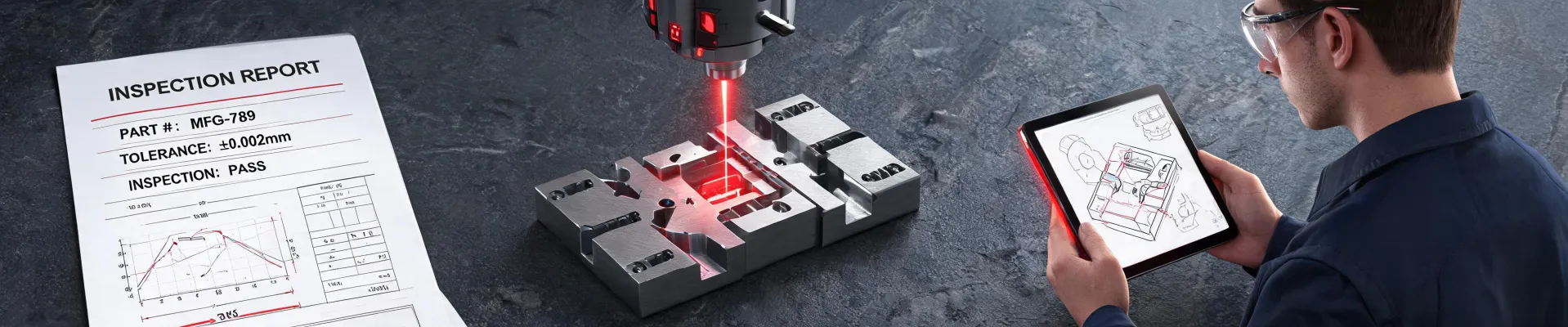
Small Order? Still Worth the Same Care
I’ve been reviewing laser-processed parts—cutting, welding, marking—for over four years. In my role as a quality inspector at Coherent Laser, I see every order that goes out the door. And here’s my take: no customer should get second‑class quality just because their order is small.
People often assume that small batches are less critical, that they can be rushed through with looser tolerances. That assumption is wrong—and costly. In this article, I’ll explain why I believe small clients deserve the same rigorous standards, share a few painful lessons from the shop floor, and address the elephant in the room: “But won’t that cost more?”
Why I Hold This View (Three Pieces of Evidence)
1. Today’s Small Client Could Be Tomorrow’s Major Account
In Q1 2024, we received a small order from a startup that was using an Ender‑3 FDM 3D printer to prototype enclosures. They needed laser‑etched serial numbers—only 50 pieces. The account was worth less than $200. Some vendors might have pushed it to the back of the queue. Instead, we treated it like any other job. Twelve months later, that startup landed series A funding and placed a $45,000 order for production‑grade laser marking. I’m not saying this happens every time. But I’ve seen it often enough to know: small doesn’t mean unimportant—it means potential.
2. Miscommunication Hits Small Orders Harder
Here’s something vendors won’t tell you: the smaller the order, the easier it is to mess up the specs. Because there’s no dedicated account manager, no weekly review call—just a quick email. I once approved a job where the customer wrote “1 mm depth” for a laser‑engraved logo. I thought they wanted a depth of 1 mm. What they actually meant was “1 mm line width.” The result? We ruined 80 out of 200 parts, and the redo cost us $1,200 in material and labor. Looking back, I should have picked up the phone. At the time, the order was so small that I assumed the specs were straightforward. They weren’t. That mistake taught me: no order is too small for a spec check.
3. The Causation Fallacy: Big Clients Don’t Equal Higher Quality
People think big accounts get better quality because they pay more. Actually, quality is what makes a client big in the first place. The causation runs the other way. A manufacturer that consistently delivers accurate, defect‑free parts will attract repeat business—and that business grows. I’ve seen $5,000 orders from multinationals that had sloppy tolerances, and $300 orders from startups that needed micron‑level precision. The assumption that “order size = quality requirement” is just lazy thinking. In my opinion, every job deserves the same baseline standard, and premium requirements should be priced separately—not reserved for big spenders.
But Isn’t This Inefficient? (Countering the Obvious Objection)
Granted, processing a small order has higher overhead per unit. The same setup time, the same inspection burden. From a pure cost perspective, a 50‑piece job is less profitable than a 5,000‑piece run. I get why some shops set minimum order quantities or charge premium rates for small batches. To be fair, that’s their business decision—and it’s often necessary to keep the lights on.
However, the way I see it, there’s a difference between charging appropriately and offering reduced quality. You can maintain the same inspection rigor, the same material verification, the same clean optics—and simply adjust the price to reflect the fixed costs. What I can’t accept is a vendor who says: “It’s just 50 parts, so we’ll use the backup laser head with slightly less stability.” That’s where the line is drawn.
In my audits, I’ve rejected batches from suppliers who tried to cut corners on small orders. One provider used a CO2 laser with degraded beam quality for a 100‑piece marking job. The fade was barely visible to the naked eye—but it was off spec. We sent it back. They argued it was “within industry standard.” I disagreed. The contract specified a certain beam profile, and small order or not, that spec had to be met.
What Does This Mean for You? (And a Note About VMC)
This isn’t just a feel‑good philosophy. If you’re a small business owner or a procurement manager looking for laser services, you should demand the same attention that a Fortune 500 company gets. And if a supplier treats your $500 order as beneath them, walk away. There are companies—like Coherent Laser—that believe every client deserves consistent quality, regardless of order size.
By the way, I’ve seen searches like “what does VMC mean drink” land on our site. (For the curious: in the industrial world, VMC usually stands for Vertical Machining Center, not a beverage. If you’re looking into integrating a laser cutter with a VMC for a hybrid process—that’s a whole different conversation.)
Bottom Line: Quality Has No Minimum Order
So here’s my final stance: small orders should not be penalized with lower quality. They should be priced fairly for their overhead, but the inspection standards, beam stability, material handling—all of it—should be identical. That’s what I enforce every day, and I’ve seen it pay off in long‑term relationships and repeat business. Don’t let anyone tell you that your 50‑piece order isn’t worth the premium treatment. It is.
And if you’re looking for a laser partner who shares that philosophy, Coherent Laser might be worth a conversation. Just make sure to ask about their quality protocol for small runs—I know I do.