Six years ago, I would have told you that a laser is a laser. Add enough watts and the material burns, right? Not exactly. After managing procurement for a contract manufacturing shop—roughly $1.8 million in equipment orders over six years, maybe $1.6 million if I'm being honest—I've had to unlearn that. And here's the thing I keep telling engineers: there is no best laser. There is only the best fit for your process.
If you're a procurement person like me, you might have started with a search for "coherent-laser" and then spent an hour reading about the physics of coherent laser light before finding actual products. Or you're comparing quotes, trying to figure out whether you need a beam profiler, or deciding between two completely different machine architectures. To keep this useful, I'm breaking it into four scenarios:
- You need stable, measurable coherent laser light for R&D or precision manufacturing.
- You are choosing among top aerospace 3d printers 2025.
- You want to add laser processing to a connected VMC—what appears in French catalogues as a vmc connectée.
- You are trying to decide between an ablative vs non ablative CO2 laser process.
Try to identify your scenario before requesting quotes. It will save you from comparing apples to maintenance contracts.
Scenario 1: When You Need Coherent Laser Light, Not Just a Higher Wattage
All lasers produce coherent light, but coherence isn't binary. Coherent laser light means the photons have a stable phase relationship, giving you low divergence and a tighter focus. For interferometry, holography, laser Doppler, or fine ablation, that coherence is the product. For simple cutting, it matters less than average power and assist gas.
The problem is that spec sheets often hide the details that tell you whether the beam is actually useful. M², beam pointing stability, coherence length, and power drift can all change after the laser warms up.
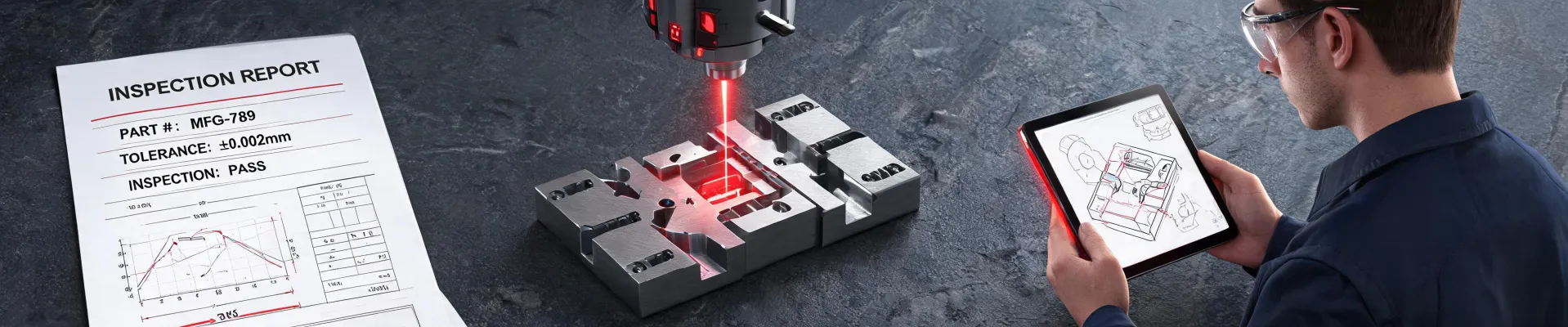
A few years ago, I watched a $14,200 laser lose a production day because its beam wandered after two hours. The vendor said the spec was fine. Our parts said otherwise. When we finally brought in one of the coherent laser beam profiler suppliers to do acceptance testing, they measured M², astigmatism, and pointing drift on both competing units. One unit had a beautiful datasheet and a mediocre warm beam. The other was slightly more expensive and rock solid.
Here's the cost math: Vendor A quoted $14,200. Vendor B quoted $12,000. Vendor B was 18% cheaper on paper. After thermal soak, Vendor B's M² crept from 1.4 toward 1.9, and we lost a day of machining plus $2,600 in test parts. The cheaper unit ended up costing more overall. That's when I started calculating TCO for every laser purchase—not just the sticker price.
Trust me on this one: if your application cares about focusability, buy the beam profiler service at the same time you buy the laser. The acceptance test is cheaper than rework.
Scenario 2: You're Evaluating Top Aerospace 3d Printers 2025
If you're searching for "top aerospace 3d printers 2025," you probably aren't buying a laser alone. You're buying a complete additive manufacturing system that prints flight-quality parts. Laser source matters, but it's only one element in a complex cost equation.
Many of the top aerospace 3d printers 2025 lists emphasize build volume and laser count. But more lasers don't automatically mean lower cost per part. Every laser adds calibration complexity, another beam path to monitor, and more potential downtime. If your process requires qualification through AS9100 or Nadcap, what matters more is repeatability and documentation.
When I evaluate an aerospace AM system, I ask the OEM three questions:
- Which laser source is inside, and what is its beam quality specification?
- How often do you require beam calibration and what diagnostics do you provide?
- What is the service history for that laser, and where are spare parts stocked?
Some machines use Coherent fiber or diode lasers as the source. That's a good starting point—Coherent has a solid reputation in industrial sources—but don't buy the brand alone. Buy the proof: beam stability data, melt pool monitoring, and a qualification path that won't bankrupt you.
The counterintuitive part is that the highest-powered machine isn't always the most profitable. A well-characterized 500 W laser with consistent beam delivery can beat a 1 kW laser that drifts. In aerospace, qualification costs are enormous. Saving $80,000 on a machine and then spending $150,000 on requalification is a mistake I've seen people make more than once.
Scenario 3: Adding Laser Power to a Connected VMC—or a "VMC Connectée"
Let's talk about machine shops. In North America, we say connected vertical machining center. In a European datasheet, you'll see vmc connectée. Same concept: the machine tool monitors and reports real-time data on spindle load, tool wear, thermal behavior, and production status. Add a laser module, and you can do in-process marking, hardening, or surface texturing without moving the part to another machine.
This is where procurement gets messy. Do you buy a turnkey system from a machine tool builder, or do you retrofit a laser head onto your existing VMC?
Retrofitting looks cheaper at first. Last year, we priced a laser marking retrofit for one of our VMCs at around $40,000 for the scan head, safety enclosure, and controller. The integrated turnkey machine from an OEM was $110,000. On paper, the retrofit was 64% less expensive.
Then we added integration time, software interfacing, operator training, machine downtime, and the risk of incompatible toolpaths. The retrofit total crossed $90,000 before we finished the first validation part. The turnkey machine was plug-and-play and came with a single support contract. Honestly, the turnkey price tag still hurts—but the TCO was better over five years.
At least, that's been my experience. If you have a strong automation team and plenty of buffer time, retrofit can still make sense. But don't ignore the soft costs. A connected VMC is only as useful as the data it gives you; adding a laser makes that data stream more complex, not less.
Ablative vs Non Ablative CO2 Laser: The Process Decision
This one confuses industrial buyers and medical aesthetics buyers alike. The search phrase "ablative vs non ablative co2 laser" usually comes from dermatology, where it describes whether the laser vaporizes skin or heats deeper tissue without removing the surface. In manufacturing, the same distinction applies: ablative means the laser removes material through vaporization; non-ablative means it heats the material without significant material removal.
For CO2 lasers, the choice changes how you set pulse energy, pulse duration, and focus. Ablative mode is what you want for cutting wood, engraving acrylic, or cleaning rust. Non-ablative mode is useful for annealing metal surfaces, welding polymer films, or heat-treating thin layers without creating a visible crater.
It's tempting to ask, "Which is better?" The honest answer is, "Better for what?" In one project, a customer wanted a mark on coated glass without damaging the coating. The first vendor ran the CO2 laser in ablative mode and cracked the coating. The second vendor used a non-ablative pulse regime—lower fluence and longer dwell—and produced a clean mark. Same wavelength. Same nominal power. Completely different result.
If you're buying a CO2 laser for unknown jobs, look for pulse-shaping capability. A system that can switch between ablative and non-ablative behavior gives you flexibility, but it usually adds cost. If you have one fixed application, you might not need that flexibility. Calculate the cost of the particular process, not the cost of "all possible processes."
How to Know Which Scenario You're In
In thirty seconds, you can place yourself:
- If you're buying a laser component and plan to verify the beam before acceptance, you're in Scenario 1—start with beam profiling and stability specs.
- If you're buying a complete machine for aerospace parts, you're in Scenario 2—start with process qualification and OEM service history.
- If you're integrating laser capability into a CNC or connected machine tool, you're in Scenario 3—build a total integration cost model.
- If you already own a CO2 laser and need to choose the right process conditions, you're in Scenario 4—define what the material should experience, not just the laser brand.
Regardless of your scenario, run the same TCO checklist before any purchase: quoted price, beam acceptance testing, calibration tools, spare parts, installation downtime, operator training, and the cost of process failure. In my spreadsheets, the cheapest quote has failed more than once. The laser that arrives with real data and reliable support rarely needs to apologize.
Take it from someone who has paid for these lessons: the goal isn't to buy the most impressive laser. It's to buy the one that pays for itself in your factory. That answer is different for a lab, an aerospace production floor, a job shop, and a CO2 process cell. Now you know which questions to ask.