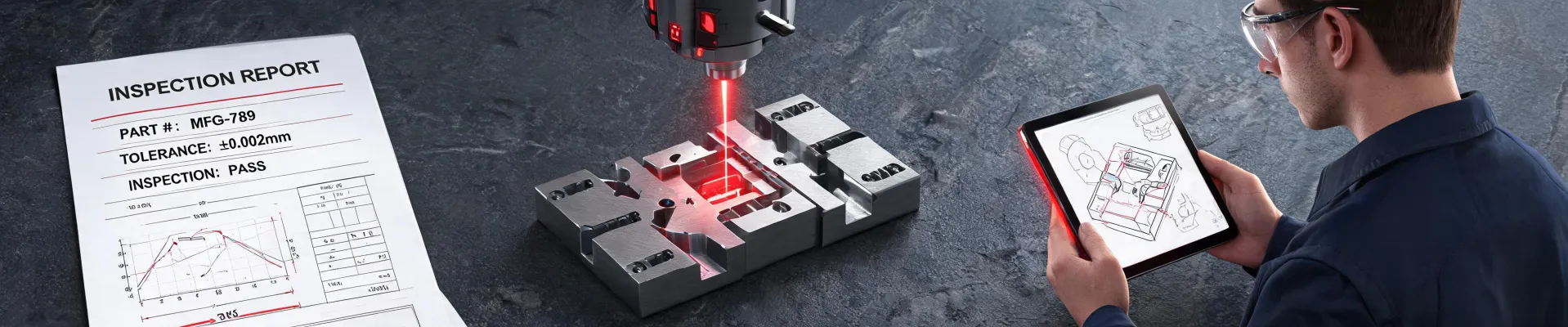
There isn't one correct answer to "which laser should I buy?" Most specification mismatches I've seen trace back to a simple root cause: someone chose a system based on a spec sheet, not on a measured beam profile.
I'm a quality manager at Coherent, a laser systems manufacturer. I review roughly 200 laser systems a year before they ship to customers. In 2024, about 12% of first-pass builds failed beam profile verification and went back for rework. Not because the lasers were fundamentally bad—because a spec on paper doesn't always survive contact with production reality.
Why should you care? Because whether you're shopping for an industrial CO2 laser, a fiber laser to mark metal injection molding (MIM) parts, or you unexpectedly landed here while searching "where to get CO2 laser treatment," the underlying principle is the same: verify the beam before you commit. Five minutes of verification beats five days of correction.
The beam is the heart of the machine. If it's out of spec, everything downstream—cut quality, weld penetration, mark legibility—degrades silently. That might sound like an engineering obsession. It's not. Every field return I've handled in the past five years can be traced to a specification drift that a profiling check would have caught before the unit left the building.
There are three scenarios. The right answer depends on which one you're in.
Scenario A: You need an industrial laser for cutting, welding, or marking
This is the most common situation. You have parts to process or products to trace. Step one is choosing the right laser family. Industrial CO2 lasers (10.6 μm) are ideal for non-metals—acrylic, wood, paper, most plastics—and still cost-effective for many metal processing jobs. Fiber lasers (around 1.06 μm) are favored for metal cutting and marking because metals absorb that wavelength far more efficiently. Ultrafast lasers—picosecond or femtosecond—come into play for micro-machining and thermally sensitive materials, where their extremely short pulses minimize heat-affected zones. Each family has strengths. There's no universal "best laser."
Each family processes materials differently: CO2 lasers cut cleanly but reflect off shiny metals; fiber lasers handle metals well but are poorly absorbed by many plastics; ultrafast pulses bypass thermal damage entirely but come with higher cost and complexity. Matching the wavelength to your material is step one. Matching the beam to your part is step two.
Now the counterintuitive part. Most people assume higher power is better. In my experience, more power is often the wrong answer—sometimes a destructive one.
A customer came to us in Q3 2024. They run a metal injection molding (MIM) line producing small actuator housings for an automotive OEM. They needed permanent serialization on 50,000 units a year. Their initial plan was a 100 W fiber laser, which sounded future-proof. But when we profiled the beam at their planned working distance, the 100 W unit at that focal spot would have deposited enough energy to overheat the thin-wall housings and distort the marks. A 20 W fiber marking system produced clean, legible codes within tolerance—at a speed that handled their volume comfortably.
The customer initially pushed back. More power meant they could "grow into it" if volumes increased. Fair point, except that the beam geometry—not the average power—was the limiting factor. When they saw the marks on the sample run, they changed their mind.
Not the obvious choice. The right one, though.
What I mean is that power is only relevant when it matches the material and geometry you're processing. A lower-output laser with the right beam profile will outperform a higher-powered one with a mismatched spot size.
The MIM parts market, as of early 2025, continues to grow as automotive, medical, and electronics OEMs adopt the process for complex metal geometry. That creates parallel demand for post-processing: laser marking for traceability, laser welding for assembly, and laser surface treatment for cleaning or texturing. These are quality processes, not "just point it and shoot." They start with a verified beam.
For Scenario A, your checklist:
- Define material, wall thickness, and part geometry before you think about power.
- Ask for beam profile data at the working distance you'll actually use, not the standard distance in the datasheet.
- Run a sample batch and inspect it the same way your customer will.
The last one sounds obvious. More than one facility has skipped the sample run to save a week, then eaten a redo that cost more than the laser itself.
That said, this worked for our customer because their part geometry is consistent and their volume is predictable. If you're a low-volume job shop handling a wide mix of materials, your calculus might be different—a versatile system with adjustable parameters might serve you better than a dedicated high-output line.
Scenario B: You're an OEM integrating a laser into your product
Designing a medical device, an imaging platform, or a precision tool that uses a laser as a component is a different challenge. You're not buying a machine. You're buying a subsystem that must perform inside your product for thousands of hours, under varying temperatures and operating conditions.
One product family our OEM customers use is the Coherent OBIS laser series. These are air-cooled, single-mode lasers available at multiple wavelengths from near-UV to near-IR. They're designed for wavelength stability and output consistency over time and temperature—exactly what embedded systems need. But stability isn't something you take on faith. It has to be measured. For example, OBIS lasers cover a range of output powers, and the right choice depends on your excitation or processing needs. The datasheet describes best-case numbers. Your acceptance test should verify them at your operating point.
This is where "Coherent Inc laser beam profiler" enters the picture. A power meter reads total output; a beam profiler measures where the energy sits across the beam—width, divergence, spatial uniformity. The two can disagree sharply. A laser can pass a power test while its beam has degraded into a shape that ruins your application. Beam pointing drift is even more insidious: it won't show in a power reading, but it can move a focused spot across your sample in minutes.
In 2022, our group started requiring M² verification on incoming laser modules from one supplier. The first batch of 20 units had 5 failures that a power-only test would have missed. The supplier replaced all five at their own cost, and the customer's pilot run shipped with zero field failures.
They hadn't wanted to add the test—it felt like overhead. The two weeks spent waiting for replacement modules were stressful, and they told me they second-guessed the call more than once. After the pilot, their purchasing spec was updated anyway.
For OEM integrators, I'd recommend a pre-shipment acceptance protocol with three checks:
- M² (beam quality) measurement at your operating wavelength.
- Beam pointing stability during a 2-hour warm-up cycle.
- Power stability over 8 hours at your set point.
Granted, that's more work than opening a box and checking output power. It's also the difference between designing around a known component and designing around a paper promise. And total cost, not sticker price, is what ultimately matters: integration time, sample failures, and downtime all count.
Scenario C: You're actually asking about medical CO2 laser treatment
Here's where I need to set an honest boundary. I'm not a dermatologist or a medical device authority. If you searched "where to get CO2 laser treatment," you were most likely looking for a clinic offering ablative skin resurfacing—and I can't recommend specific providers. But from the laser physics side, I can tell you what to look for.
Medical CO2 lasers use the same 10.6 μm wavelength as industrial CO2 cutters—it's strongly absorbed by water, which makes it effective at vaporizing skin tissue. The clinical outcome depends on controlled, uniform pulses. An uneven beam means uneven energy delivery, which can mean uneven results and longer recovery. The same beam-quality concerns we chase in a factory are directly relevant in a clinic.
Also worth knowing: the term "CO2 laser treatment" is ambiguous. In medical settings, it usually refers to fractional or fully ablative resurfacing. In industrial settings, it can mean surface treatment to alter material properties—cleaning, texturing, or hardening a metal surface without cutting it. If you're in an industrial environment, that's a different specification conversation entirely.
If you're choosing a provider, a reasonable set of questions:
- Confirm they're using an FDA-cleared CO2 laser system for your specific indication.
- Ask which physician or clinician will perform the treatment, and what their experience level is.
- Request before/after photos from patients with a similar skin type and concern.
What happens right after CO2 laser treatment? Expect significant redness, swelling, and a stinging or burning sensation for the first 24 hours—similar to sunburn. The skin typically peels over the next 3–5 days, and visible healing takes one to two weeks depending on treatment depth. I can speak to the physical response, but your provider's aftercare instructions are the ones you should follow exactly.
This gets into clinical territory where I'm not qualified. I'd also flag this: most patients won't ask a clinic about beam quality, and that's fair. But if a provider can't answer basic questions about their equipment—the system name, the manufacturer, when it was last serviced—that's a reasonable yellow flag.
Which scenario are you in?
If you're still not sure, ask yourself:
Do you have parts or materials that need cutting, welding, or marking? → Scenario A. Start with material compatibility, then verify the beam before you accept delivery.
Are you designing a product with a laser inside it? → Scenario B. Make beam quality part of your incoming inspection, not an afterthought.
Are you looking for a cosmetic or dermatological procedure? → Scenario C. Choose the provider and the FDA-cleared system with care.
The lesson across all three: prevention beats correction. A beam profile check costs minutes. Fixing a failed batch costs weeks—and that's before you count the schedule damage. The $18,000 project that became a $22,000 redo. The 8,000 MIM parts that lost their traceability mark mid-run. Every one of those losses came from verification skipped at the front end.
You don't need a full optics lab to get this right. A beam profiling camera configured for your laser's wavelength, plus a clear specification from the supplier, is enough to catch the problems that cause most field failures. We use the same kind of equipment on our own production floor.
Five minutes of verification, or five days of correction. I know which one I choose.