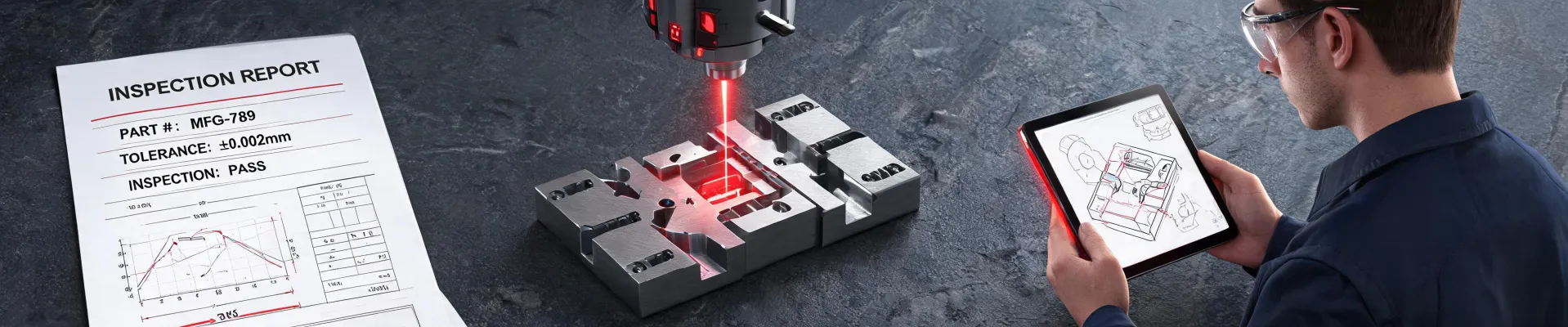
Around eighteen months ago, I had two quotes sitting on my desk. One was for a coherent-laser system that could reduce our prototyping lead time. The other was for a used double column VMC that a local shop was selling after upgrading to a new machining center. Our goal was simple: start producing small custom parts in-house instead of outsourcing them.
I manage procurement for a 40-person job shop. We spend about $320,000 a year on materials and outside processing, and I've been tracking every equipment invoice for six years. I've made good calls and a couple of expensive ones. This comparison is the one I couldn't find when I needed it.
Here's the short version before I get into the numbers: the laser vs. CNC milling question shouldn't be answered with "which is better" but with "which fits your material mix and your team." I'll compare them on four dimensions: real purchase cost, material capability, operating cost, and workflow fit.
Dimension 1: The Real Upfront Cost
The sticker price is rarely the real cost. We looked at a Coherent Cube laser for marking and thin-film cutting. The base quote was manageable. Then I made the mistake of asking to add a rotary fixture and safety enclosure. The final number was nearly 1.8 times the base price. That's not a complaint—the fixture was worth it. But I had to re-forecast the budget.
The more powerful Coherent Verdi 5W 532 nm laser class was the other option. It's a serious platform, but for our daily work it was overkill. The Verdi gives you 5 watts at 532 nm, which is helpful for reflective materials and precision micromachining. We don't do enough of that work to justify the extra cost per watt. If you're running a lab or a high-precision medical device line, the Verdi class makes sense. For a job shop doing brackets, gaskets, and serial-number marking, the Cube is the faster payback.
On the CNC side, the used double column VMC looked like a steal at $18,000. After rigging, tooling, a new spindle bearing, and a coolant pump, the total was $33,400 before we made one production part. Then the axis lubrication timer failed, and we didn't catch it soon enough. That repair cost another $4,100. So our "cheap" VMC ended up at $37,500.
We also priced an MR-1 CNC milling machine for a smaller second cell. The MR-1 is a compact benchtop mill that's popular in prototyping shops. It's a fraction of the price of a full-size VMC, and it can cut aluminum and mild steel if you're patient. But it's not a production beast. If you need 300 parts a month, the MR-1 will feel slow.
Per FTC advertising guidance (ftc.gov), "low hours" and "recently overhauled" are claims, not facts. If a used machine seller won't put those claims in writing, walk away. We learned this after our VMC's spindle showed up with more noise than a worn out part should make.
Dimension 2: Material Capability and Precision
This is where a lot of buyers get confused, because the capabilities overlap more than you'd think. A laser can cut thin sheet metal, but it doesn't create a square edge with ideal metallurgy. A CNC mill can make a pocket with tight tolerances, but it can't mark a serial number on a curved surface without repositioning.
We use the Coherent Cube laser for thin stainless, polycarbonate, and powder-coated panels. It gives us clean edges on material up to about 1.5 mm. The Coherent Verdi 5W 532 nm laser class would give us better absorption on copper and gold traces—things we only see once a month. If your work is dominated by reflective metals, the green wavelength of the Verdi is a legitimate reason to spend more.
A CNC mill, especially a used double column VMC, is the right tool for thicker structural parts, threaded holes, and features that need a cutter to actually touch the material. The MR-1 CNC milling machine can help with smaller parts, but it won't replace a VMC for large plates or heavy cuts.
One way to think about it: when someone asks how have 3D printers helped sea turtles, the answer is custom prosthetics and research models printed layer by layer. That's a great example of choosing the tool for the shape. But you wouldn't 3D print a sea turtle shell if you needed a load-bearing implant, and you wouldn't laser-cut a gearbox housing from a 12 mm steel plate. In the same way, laser and CNC each have a material sweet spot.
Dimension 3: Operating Cost and Maintenance
After six months of running both types of equipment, the operating cost gap became clear.
The Coherent Cube laser adds about $120 to our monthly electric bill. Its main consumables are the diode and occasional optics cleaning. Air-cooled, low maintenance, and our team could learn it in a day. The Verdi class needs a chiller and more careful environment control. Again, justified for the right work, but not for us.
The used VMC added $340 a month in electricity, plus coolant concentrate, tooling replacement, and a full lubrication service. If you're not routinely inspecting the lubrication system, you're one missed alarm away from a seized axis. We didn't have a formal PM schedule for the VMC, and it cost us. We do now.
This is where I have a strong opinion: if you don't have a full-time maintenance tech, a simpler laser wins for low-complexity cutting and marking. The CNC mill will demand more of your schedule. That's not a reason to avoid CNC, but it is a reason to budget your labor hours.
Dimension 4: Workflow Fit and Lead Time
Our customers ask two questions: "How fast can you prototype it?" and "Can you hold this tolerance?" The laser answers the first one faster. A DXF can be on the machine in 10 minutes. The CNC mill answers the second one with more authority, especially for thicker parts.
When we need a quick batch of brackets or a custom panel, the Coherent laser is the right first move. When we need a machined pocket that ends with a smooth internal radius, we don't argue with physics—we load the VMC.
The MR-1 CNC milling machine has a place too. It's useful for R&D teams that want a small, affordable machine on the floor. But it's not a substitute for a used double column VMC if your parts are large or your runs are long. Know your part envelope before you buy.
What I'd Tell a Younger Version of Myself
If your work is mostly thin material, marking, and short-run plastic or sheet-metal parts, buy the Coherent Cube laser. The Coherent Verdi 5W 532 nm laser class is worth the upgrade only when you have a steady stream of reflective-material or high-precision jobs.
If your work is structural machining, threaded holes, or parts over 3 mm thick, buy a CNC mill. A used double column VMC can be an excellent investment if you verify the maintenance history. And if your parts are small, an MR-1 CNC milling machine can get you started without a huge capital outlay—just keep your production expectations realistic.
The best answer, in our case, was both. It wasn't the cheapest decision, but it cut our outside processing cost by about 17% in the first year. Our laser marks and cuts thin materials; the VMC handles the structural work. That combination means fewer rushed orders and fewer compromises.
This worked for us because we're a mid-size B2B shop with a predictable product mix. If you're a high-volume machining operation, your math will probably favor CNC for anything that isn't thin-sheet or marking. And if you're a research group, the Verdi's green beam might be your main destination. Different context, different call.
I'd rather spend ten minutes explaining this than have a customer send me a 6 mm steel part expecting the laser to cut it like paper. An informed customer makes a better decision—and so does an informed buyer.