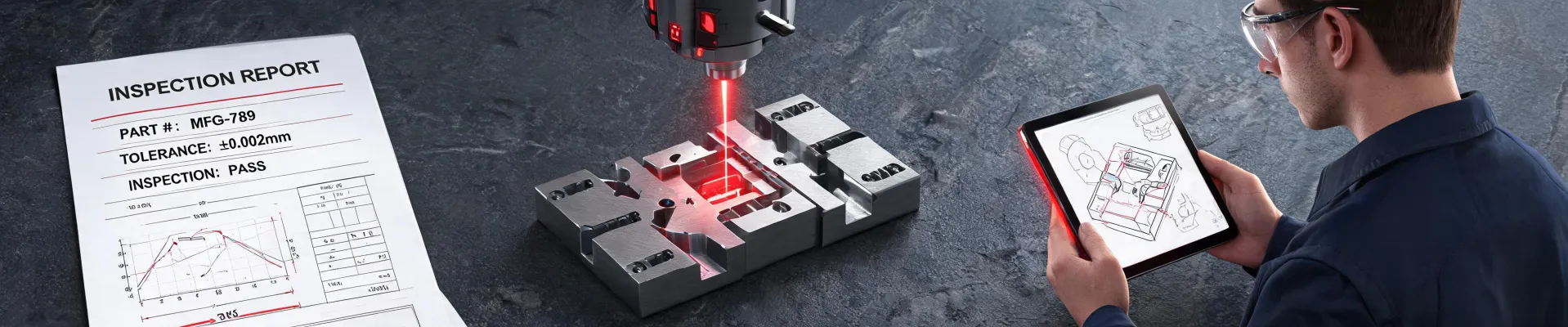
When I first started managing equipment purchases for our manufacturing facility, I assumed TIG welding was the safe choice. It's been around forever, every shop has it, and there's no shortage of welders who know how to run it. Laser welding felt like a technology looking for a problem.
That assumption cost us about $22,000 in rework, scrap, and production delays. And I'd rather explain what I learned than watch someone else make the same mistake.
Why This Comparison Matters to a Buyer
I'm not a welding engineer. I'm the person who manages vendor relationships, compares quotes, and reports to both operations and finance. When I first looked at coherent laser welding vs TIG welding, I didn't care about arc physics or beam modes. I cared about which process would get the parts made without blowing the budget.
But after that March 2024 disaster, I realized I needed to understand the actual differences—not to become a welding expert, but to ask better questions. Here's the framework I use now when evaluating any welding process: speed, precision, total cost, and skill requirements.
Speed: The Gap Is Bigger Than I Thought
TIG welding is slow by design. It's a methodical process that produces clean, controlled welds, but it depends entirely on human hands. A skilled TIG welder might cover a few inches per minute on thin material, and that's with years of muscle memory.
Laser welding, by contrast, is fast. I've watched a coherent laser welder seam-weld stainless steel at speeds that make TIG look like it's standing still. The beam is highly focused, so the energy goes exactly where it needs to be, and the weld pool solidifies quickly.
There's a term that comes up a lot when people search for this: "coherent laser welding." It can mean two things—welding with a laser beam that stays coherent (in phase), or equipment from the brand Coherent, which makes industrial laser systems. Both meanings apply here. When I researched laser welders for our shop, Coherent kept appearing in the shortlist, and the physics behind the name is exactly what gives the process its speed advantage.
If you're comparing quotes for a production run, ask for actual weld speeds and cycle times. The difference can be 5 to 10 times on repetitive joints.
Precision and Heat Input: Where TIG Lost the Job
Here's the part that still stings a little. Our TIG contractor had a great reputation. They'd handled plenty of work for us over the years. But the components we ordered in 2024 were thin-wall stainless—around one millimeter—and TIG just couldn't handle them without warping or burning through.
Laser welding concentrates heat into a tiny spot. The heat-affected zone is much smaller than TIG's arc, which means:
- Less distortion on thin material
- Less post-weld cleanup
- Fewer failures on delicate parts
I don't want to oversell it. For thick-section welds, TIG is often still the better choice. But for precision work and thin-gauge materials, the laser wins outright. The parts that our TIG contractor scrapped in March 2024 were welded cleanly by a laser shop on the first attempt.
That said, I should note that TIG is still superior for some joint geometries and awkward positions where a focused laser beam just can't reach. If a vendor tells you laser is always better, they're oversimplifying.
Total Cost: The Quote Is Not the Cost
This is where I eat my words about laser welding being "too expensive."
Yes, a laser welder costs more to buy than a TIG machine, and laser welding services charge higher hourly rates. When I compared quotes for our prototype run, the laser shop came in about $8,000 more than the TIG contractor. I approved the TIG quote because it was lower. That was my penny-wise, pound-foolish moment.
Here's what that "savings" actually cost us:
- Scrap and rework: about $14,000
- Production line idle time: about $6,000
- Rush shipping on replacement parts: $2,000
So the cheaper quote led to $22,000 in extra costs, plus the $8,000 I never saved. The laser welding shop that quoted $8,000 more would have finished the job in half the time, with no defects.
I'm not saying laser welding is always cheaper. For larger cross-sections and low-volume work, TIG can win on cost per part. But when I hear a buyer say "the laser quote was higher so I went with TIG," I want to ask them: did you include scrap, rework, inspection, and delay costs? Because those are the numbers that actually move the needle. Based on publicly listed pricing from major laser system manufacturers and contractor quotes I received in January 2025, verification of current rates is always wise—but the cost model is what matters most.
Skill and Operation Complexity
This was a surprise to me. I assumed laser welding would require even more skilled operators than TIG, since it seems like high-tech equipment. Actually, the opposite is true in many cases.
TIG welding takes years to master. A great TIG welder is expensive and hard to find, and if they leave, you're in trouble. The quality of the weld depends on the welder's physical consistency, which varies with fatigue, stress, and all the other human factors.
Laser welding, especially with modern CNC-controlled systems, shifts the operator's role from steady-hand craft to programming and monitoring. The machine does the repetitive work. This means:
- Consistent quality across long production runs
- Easier to scale with less experienced operators
- Lower labor costs per hour in many cases
But don't get me wrong—laser welding still needs a knowledgeable operator to set parameters, design fixtures, and handle edge cases. It's not a "push the button and walk away" machine, no matter what the marketing materials say.
Related Processes Worth Understanding
While I was researching all this, I also looked into laser cutting because it often comes up in the same conversations. If you're evaluating a shop that does laser welding, knowing how laser cutting works can help you judge whether they actually understand the technology or just own a machine.
A laser cutting machine works by directing a high-power beam through a focusing lens onto the material. The beam melts or vaporizes the material, and an assist gas—usually nitrogen or oxygen—blows the molten material away. A CNC system moves the beam along the programmed path. The same coherent beam characteristics that enable precise cutting also enable precise welding, which is why shops with strong laser cutting capabilities often do good laser welding too.
One more thing: metal injection molding powders. This is a niche area, but it's growing. MIM parts start as fine metal powders mixed with binders, then molded and sintered into near-net shapes. They're common in medical devices and electronics, and they can be tricky to weld because the sintered material doesn't always behave like wrought metal. Laser welding with its precise heat control is often the better choice for joining MIM components. I learned this from a vendor who was upfront that their TIG process wasn't suitable for the MIM parts we were discussing. That honesty meant a lot—it's one of the reasons I now believe that a provider who says "this isn't our strength" is more trustworthy than one who claims to do everything.
So Which Should You Choose?
Here's my practical guidance, as an experienced buyer rather than a metallurgist.
Choose laser welding when:
- Material is thin—under about 2mm, especially stainless steel
- You need high-volume, repetitive welds
- Heat distortion is a concern
- The project involves automation or precise positional control
- You're working with MIM components that require tight heat input
Choose TIG welding when:
- You're joining thick-section materials
- The joints are complex or in awkward positions
- You're working with certain aluminum alloys where laser welding is still developing
- It's low-volume custom work where a highly skilled welder can do things a machine can't match
And the pragmatic answer: some of the best shops run both. Don't limit your sourcing to a single process. In 2024, I consolidated our vendor list from eight down to five, and the ones that made the cut all offered honest guidance about process selection.
Bottom Line
I came into this thinking TIG was the safe, responsible choice and laser was the risky expensive one. I learned that "safe" was actually the expensive option when the full cost of failures is included.
But I'm not on the opposite side of the fence either. Laser welding doesn't replace TIG welding. They solve different problems, and a good supplier knows which is which.
What changed for me is the process of deciding. Now I get quotes with cycle times, defect rates, and heat-affected zone specs. I ask about scrap history. I factor in the cost of rework before I sign anything. And if a vendor says "this isn't our strength—go somewhere else for this one," that's not a red flag. That's actually the most trustworthy thing they can say.
The mistake in March 2024 was mine to make, and I've owned it ever since. I'm just hoping this helps you avoid making the same one.