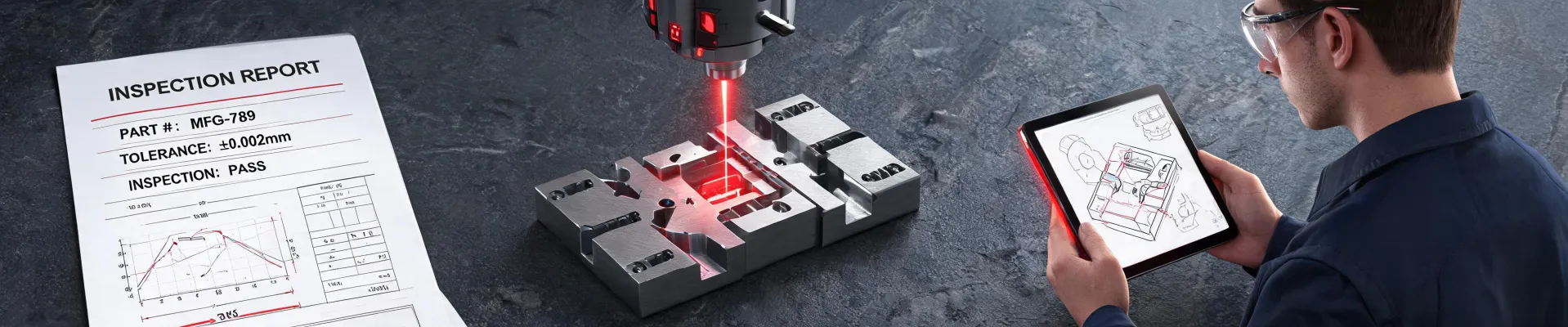
I'm a procurement manager handling custom manufacturing orders for about six years now. I've personally made (and documented) a bunch of expensive mistakes—probably totaling around $15,000 in wasted budget over the years. This is the story of the $3,200 one. The one that finally got me to stop cutting corners on laser sources.
It happened in early 2023. We had a big contract for a medical device component that required super precise hermetic sealing. The spec was tight: weld depth tolerance of ±0.02mm, zero porosity. My team had done similar work before, but never with this kind of consistency requirement across a 5,000-piece run.
The Setup: A New Project With Old Budget Thinking
Our main production line uses a Coherent laser welder—specifically, a fiber laser system that has been rock solid for years. But for this new project, the production manager wanted to dedicate a separate line because of the volume. So I had to spec a new welding station.
I looked at the budget, and my first instinct was to save some money upfront. A direct OEM laser from Coherent for that application? Quote came in at around $68,000 for the integrated system. A third-party solution using a different laser source? $52,000. To be fair, the specs looked comparable on paper. Same average power, similar pulse width. I figured: 'How different can the weld quality really be?'
I was about to find out.
The Mistake: Ignoring the 'Boring' Part of the Spec
The third-party laser arrived, we set it up, and initial test welds looked fine. I approved the line. Then production started.
For the first 200 pieces, everything seemed okay. But on day three, QC flagged a batch. Porosity. Not on every weld, but on maybe 15% of them—enough to fail the leak test. I spent a day checking parameters: the gas flow was fine, the fixture alignment was fine. I even swapped the focusing lens.
Here's something vendors won't tell you: beam quality isn't just a number in a datasheet. The coherent laser source we had on our main line produced a beam with a much cleaner mode structure—better for consistent keyhole formation during deep penetration welding. The third-party laser had a 'comparable' M² rating, but in practice, the beam profile was messier. On a 2mm-thick stainless part, that messiness translated to intermittent instability at the weld pool. You couldn't see it from the top surface. You only saw it on the cross-section. We ended up scraping 740 pieces. At roughly $4.50 material cost per piece, that was $3,330 in raw waste, plus the labor and the QC re-certification time.
The Wake-Up Call: The Customer Noticed
The worst part? The client caught it before our QC did. Their incoming inspection found porosity on a sample. They put the entire order on hold. My company's reputation took a hit. I had to fly to their facility the next day to explain what happened and present our corrective action plan. I still remember the quality engineer's face—he didn't say much, but the look said everything. We had lost some trust.
That's when I learned the quality perception lesson the hard way. It's not just about the physical product. It's about the brand signal you send. When we deliver a flawed part, the customer doesn't think 'they had a bad batch.' They think 'this company isn't reliable enough for our high-spec work.' The $16,000 I saved upfront cost us way more than $16,000 in scrap and rework. It cost us in client confidence.
The Fix: Going Back to a Coherent-Based System
We swapped the line. Put in the coherent laser welder that we should have ordered from the start. Same gas, same parameters. The reject rate dropped to below 0.5% immediately. The beam stability was just better. I wish I could say I was smart enough to know that ahead of time, but honestly, the datasheets didn't tell the full story. It required making the mistake to understand it.
This worked for us, but our situation was a high-volume medical device run with zero-tolerance specs. Your mileage may vary if you're doing lower-volume work with looser tolerances. If you're just tack-welding brackets, a cheaper laser might be fine. But for anything where a single bad weld means a functional failure? Don't make my mistake.
Lessons Learned (That I Now Give to Every New Hire)
I now maintain our team's pre-purchase checklist. Here's what we look at before buying any laser source now, even if the upfront price looks good:
- Beam quality in practice, not just on paper. An M² number is a starting point, not a guarantee of weld consistency.
- Service and support history. Coherent has a proven track record as an OEM source for companies like Trotec. That counts for something.
- Total cost per good part. A $50,000 laser that produces 98% yield is cheaper than a $40,000 laser that produces 85% yield, even if the upfront cost is higher.
- Client perception. When something goes wrong, a 'brand name' laser gives you more credibility. It's sad but true. The customer asks fewer questions.
Bottom line: don't be like me. Don't learn this lesson by throwing away a $3,200 batch. The $16,000 I saved upfront ended up costing me about $8,000 in total losses (scrap, re-cert, expedited shipping, my wasted time), plus a chunk of reputation that I'm still rebuilding.