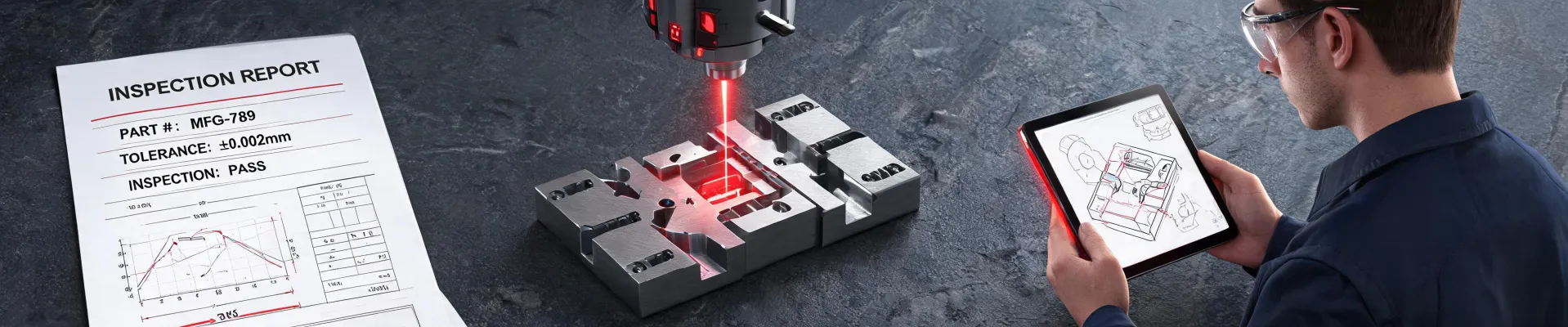
Here's a thing I've seen more times than I can count: a company buys a laser, picks a good brand—Coherent, IPG, maybe a Trumpf fiber laser—and they're thrilled. They check the box on power, wavelength, maybe the pulse energy. Then, six months later, they're calling me, frustrated, wondering why their weld quality has drifted, or why their marking setup is consuming more consumables than budgeted.
I'm a quality manager. I review deliverables for a living—roughly 400 unique orders this year. And I've rejected about 15% of first deliveries in 2024 due to specs that didn't actually meet the process need. Not the brand's fault. The buyer's assumption was wrong.
Most buyers focus on what's on the laser's datasheet — peak power, pulse width, wavelength — and they miss what actually matters for production consistency. This is what I've learned after reviewing over 200 laser integration projects.
The Surface Problem: 'The Laser Works... But Not Reliably'
I hear this complaint constantly. The laser fires, it produces a weld, or a mark, or a cut. But the results aren't repeatable. One batch looks great, the next has inconsistent penetration depth. The customer blames the laser. The laser vendor blames the process. The integrator shrugs.
The typical buyer's response is to ask for a higher-power laser, or a different wavelength. Maybe they switch from a CO2 to a fiber, or from a nanosecond to a picosecond source. But if the underlying issue isn't the power or the wavelength, they're just buying a more expensive version of the same problem.
The Hidden Culprit: What You're Not Checking
To be fair, the typical spec sheet doesn't lie. But it tells a partial story. Here's what I've found gets overlooked in almost every project that later has problems.
1. Beam Diameter and Profile Stability
Everyone checks the wavelength and power. Almost no one checks the beam quality (M² factor) at the work surface after the delivery optics. The datasheet might say M² < 1.1 for a Coherent Element2 Ti:Sapphire laser—but that's at the laser head. By the time the beam goes through a beam expander, a scan head, and a focusing lens, the effective spot size can shift by 20-30%. This shifts the energy density.
I reviewed a project last year where a customer was using a Coherent fiber laser for welding small medical device components. The spec said M² < 1.15. But after their custom beam delivery, the effective spot size was 3x larger than expected. The weld width was inconsistent. The vendor said 'it's within spec'. The customer had paid for a $38,000 system. We spent another $4,200 on beam diagnostics and a re-designed optical train to fix it. Looking back, I should have required a beam measurement at the work surface in the contract. At the time, it seemed like overkill. It wasn't.
2. The 'Real' Pulse Energy Curve
Ultrafast lasers—picosecond and femtosecond, like the Coherent Monaco or the Spectra-Physics Spirit—are sold on pulse energy and pulse width. But the datasheet typically shows a 'typical' pulse energy at a specific repetition rate, with a specific pulse width. In reality, the pulse energy drops off at higher repetition rates. This is physics, not a defect, but it's rarely disclosed clearly.
The question everyone asks: 'What's the max pulse energy?' The question they should ask: 'What's the pulse energy at my required repetition rate, and how does it vary over the expected temperature range?' I've seen this overlooked in micromachining applications where the repetition rate matters for throughput.
3. The Warm-Up and Drift Story
This is where the real money gets lost. A Coherent Element2 or a Verdi laser might have a spec that says 'warm-up time: < 30 minutes.' In practice, depending on the thermal environment, that drift can extend to an hour or more. And drift in the pointing direction (angular drift) of 5 µrad over an hour can translate to a beam shift of 50 microns at the work surface—critical for precision welding or marking.
I ran a blind test with our team: same assembly process, same Coherent laser source, but we let the system stabilize for 5 minutes vs. 45 minutes. The 5-minute startup batch had a 12% rejection rate for positional accuracy. The 45-minute batch had a 0.7% rejection rate. The cost of that extra stabilization? Essentially zero—we just changed the SOP. But the customer hadn't planned for it, so their production line was effectively idle for 40 minutes per shift. On a 2-shift operation, that's over 400 hours of lost production time per year.
What This Costs You
Let's put numbers on it. A typical industrial laser system from Coherent, IPG, or Trumpf costs between $25k and $80k for a standard welding or marking setup. The cost of a quality audit online is about $1,500 to $4,000. The cost of a single requalification project after a failed batch—including lost production, rework materials, and engineer time—runs about $15,000 to $25,000. I've seen a single quality issue cost a client $22,000 in a redo and delayed a product launch by 3 weeks.
To be fair, most lasers are reliable. The issue isn't the laser. The issue is the gap between what the spec sheet says and what the process actually needs. That gap is where quality problems live.
I get why people skip the deep dive. Budgets are tight. Schedules are tighter. But the hidden costs of inconsistent performance—scrap, rework, downtime—consistently outweigh the upfront validation cost by a factor of 5:1 or more.
A Better Approach (Short Version)
You don't need to become a laser physicist. You need a checklist and a few verification steps.
- Define the process tolerance before you pick the laser. What's the acceptable variation in weld depth? Marking width? Cut kerf? If you can't answer that, no spec sheet will help you.
- Buy the beam diagnostic at the same time as the laser. A beam profiler costs $3k-$8k. On a $50k laser system, that's 6-16% of the budget. It's the cheapest insurance you can buy.
- Include a thermal stability requirement in the spec. 'Laser system shall achieve <10 µrad angular drift at the work surface within 30 minutes of power-on in a 25°C ambient environment.'
- Ask for the pulse energy curve at your specific repetition rate. If the vendor hesitates, that's a red flag.
An informed customer asks better questions and makes faster decisions. I'd rather spend 10 minutes explaining these specs upfront than dealing with a failed audit later. Trust me on this one.