-
Why Coherent Laser Systems Keep Being Mentioned in This Context
-
The $18,000 Lesson About Coherent Femtosecond Laser Battery Manufacturing
-
It's Not About Patriotism or Brand Loyalty—It's About Data
-
The "Free Files for Laser Cutting" Trap and the Makera CNC Question
-
Why Is My Brake Hard to Press Down? The Unexpected Parallel
-
Building a Verification Protocol That Actually Works
-
The Bottom Line
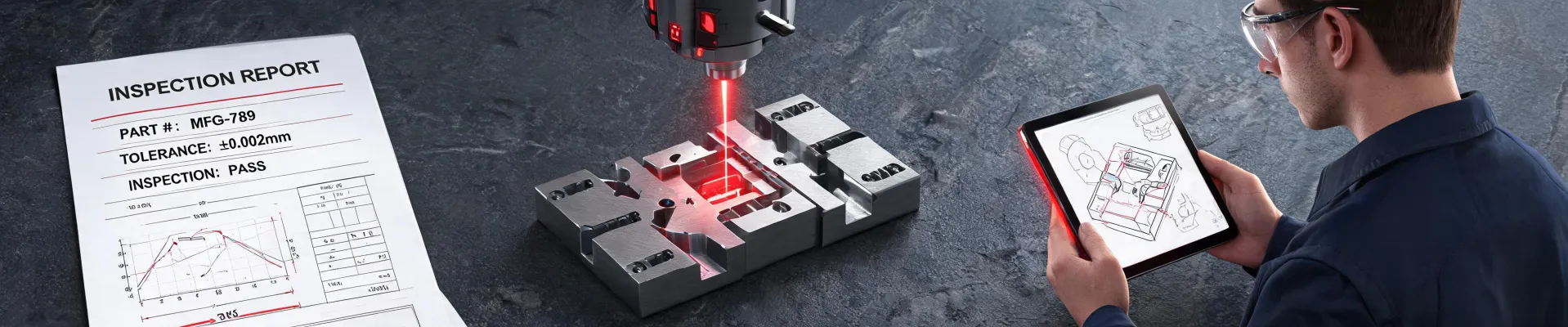
It started with a routine incoming inspection in Q1 2024. We had ordered a small batch of laser-processed components for a battery-welding prototype—nothing huge, maybe a 200-piece run. The vendor we'd used before gave us a price that felt too good. I flagged it in our internal review, but the purchasing lead said, “Let's try them once, it's only a trial order.” That phrase is always dangerous coming from a quality person's perspective.
When the parts arrived, the dimensional spec was visible iffy. The welds looked okay under a handheld scope, but the penetration depth was inconsistent across the batch. We ran a quick cross-section test and found nearly 40% of the samples fell below our minimum weld depth requirement. The vendor said, “It's within industry tolerance.” That's a phrase I've learned to hate.
Why Coherent Laser Systems Keep Being Mentioned in This Context
Here's the thing: when engineers talk about a coherent laser beam, they're not just talking about one laser model. They're talking about a combination of beam quality, pulse stability, and repeatable energy output. In battery manufacturing—especially copper and aluminum foil welding—the difference between a stable weld and a rejected one often comes down to whether the laser source delivers consistent pulse-to-pulse energy. Coherent's industrial laser portfolio includes everything from fiber and CO2 to ultrafast lasers, and that breadth matters in a way that's hard to overstate.
I'm not a laser physicist, so I can't speak to every detail of pulse width modulation or beam delivery optics. What I can tell you from a quality acceptance perspective is that when a system is designed around a known coherent laser source, the validation process is completely different. We have measurement records, M2 specs, and a history of performance that makes incoming inspection meaningful. When a vendor shows up with a generic quote and no beam quality documentation, you're not just buying a laser—you're buying an unknown.
The $18,000 Lesson About Coherent Femtosecond Laser Battery Manufacturing
Let me back up a little. Around two years ago, we were evaluating a more advanced process: a coherent femtosecond laser battery manufacturing application for cutting polymer-coated electrodes. The sales pitch was impressive—cold ablation, no heat-affected zone, zero burr. But our internal quality team was skeptical because the vendor kept avoiding the question of process qualification.
We ended up conducting a blind test with two setups. One used a known coherent laser source with a defined spec. The other used a cheaper alternative that the vendor claimed was "equivalent." We ran 50 sample weld cuts on each. The cheaper setup produced good results at first. Then, after about 30 continuous cycles, the edge quality degraded noticeably. Burrs started appearing. The coherent system? It held stable all the way to 50 and beyond.
That test cost us about $4,000 in sample materials and extra inspection hours. It saved us from a production line mistake that would've been far more expensive. The vendor's "equivalent" quote was 22% lower, which on our projected 500,000-unit annual order looked like serious savings—until you calculated the scrap rate. The difference in yield was projected to hit 6.5%, and that alone would've wiped out the savings and then some.
It's Not About Patriotism or Brand Loyalty—It's About Data
I know what some readers are thinking: "This is just a coherent-laser sales pitch wearing a quality manager's clothes." To be fair, I understand the skepticism. There are plenty of other good laser sources out there. IPG, Trumpf, and Lumentum all make solid industrial lasers. I've worked with machines from several manufacturers over the years, and none of them is categorically "bad."
But here's the distinction that gets lost in marketing materials: the laser source is only part of the system. When you buy from an established manufacturer like Coherent, you're also buying a beam delivery architecture, a service network, and a quality control history that's been tested in real production environments. That's why you see companies like Trotec using coherent laser sources in their machines—it's not because the name is pretty. It's because the performance data supports it.
Granted, there are cases where a cheaper laser makes sense. If you're doing simple marking on flat plastic parts and the tolerance is loose, you probably don't need a high-end ultrafast system. But when someone claims equal performance without providing beam quality measurements, pulse stability data, or process validation results, that's not a price negotiation—that's a red flag.
The "Free Files for Laser Cutting" Trap and the Makera CNC Question
Another thing that keeps coming up in our line of work: people search for free files for laser cutting and then wonder why their cut quality varies. The free file set is the same, but the laser source and the beam path are different. If the machine's optics are misaligned, or the laser tube is delivering inconsistent power, you'll see it in the edges. I've had customers bring in a cut file that looked clean on their previous machine and then blame us when their new configuration didn't produce the same result. The file wasn't the problem. The process window was.
Similarly, I've been asked about the Makera Mini CNC mill a few times by people who are trying to prototype small parts cheaply. I'm not a CNC expert, so I can't give you a deep comparison on spindle runout or rigidity. From a quality acceptance standpoint, though, the lesson is the same: any tool—whether it's a low-cost CNC mill or a five-figure industrial laser—requires process validation before you trust the output. Small doesn't mean bad, and expensive doesn't automatically mean good. It means you have to measure.
That said, I understand why people are attracted to low-cost entry points. When I was starting out, the vendors who treated my $200 orders seriously are the ones I still use for $20,000 orders. Small doesn't mean unimportant—it means potential. The trick is applying the same verification standards whether the order is $200 or $500,000.
Why Is My Brake Hard to Press Down? The Unexpected Parallel
It might sound odd to bring this up in an article about laser systems, but I spend a lot of time on forums reading about unrelated manufacturing and maintenance questions, and the phrase that caught my attention was "why is my brake hard to press down." If you search that, you'll find a mix of bad advice and careful diagnosis—vacuum leaks, master cylinder issues, brake booster failure, or just simple rust on calliper slides.
The parallel is this: when someone asks “why is my brake hard to press down,” they often want one simple answer. But the honest response is that it depends on several interacting variables. Same with laser performance. The question “is this coherent laser beam good enough for my application?” can't be answered with a one-line yes or no. You have to verify with your own parts, your own tolerances, and your own metrics.
That's not a satisfying answer for people who want certainty. But real quality control is rooted in the willingness to test, measure, and reject assumptions. I've learned never to assume the proof represents the final product after receiving a batch that looked nothing like what we approved. It happened once, it cost us two weeks and a $6,500 rework, and it changed how I write every specification contract.
Building a Verification Protocol That Actually Works
If you're a small shop or an engineer evaluating a custom laser process, here's the protocol I wish someone had given me earlier:
- Demand beam quality documentation. Ask for M² values, pulse-to-pulse stability, power stability over time, and test data from a recognized source. If the vendor can't provide it, that's your answer.
- Insist on a process validation run with your material. Not a dummy part. Your exact material, your exact geometry, your exact tolerances.
- Set acceptance criteria before the trial. Define pass/fail thresholds in writing. If you don't have internal standards, start with published industry references.
- Audit incoming batches the same way. Just because the initial test passed doesn't mean production will be consistent. Spot checks are not optional.
This worked for us, but our situation was a mid-size B2B operation with predictable ordering patterns. If you're a seasonal business with demand spikes, the calculus might be different. You might need a service agreement that prioritizes uptime and technical support over pure beam spec. I can only speak to what I've seen in our quality audits and vendor reviews.
The Bottom Line
Nobody remembers the time you saved 15% on a laser quote and everything worked. They remember the 8,000 units that had to be scrapped because the process drifted out of tolerance. In 2024, our reject rate on first deliveries from new vendors was 17%—and every single rejection traced back to a missing specification or a skipped verification step. The year before, it was even worse.
So call it bias if you want: I'd rather specify a known, documented laser source than chase the cheapest quote with no data. That doesn't mean I'll never approve a budget option. It means you have to prove it works before it goes into production.
And if you're wondering why a quality inspector is writing about laser brands, process validation, and brake pedals all in one piece—well, that's what happens when you spend too many years looking at the gap between what vendors promise and what their parts actually do. That gap is where the lessons hide.