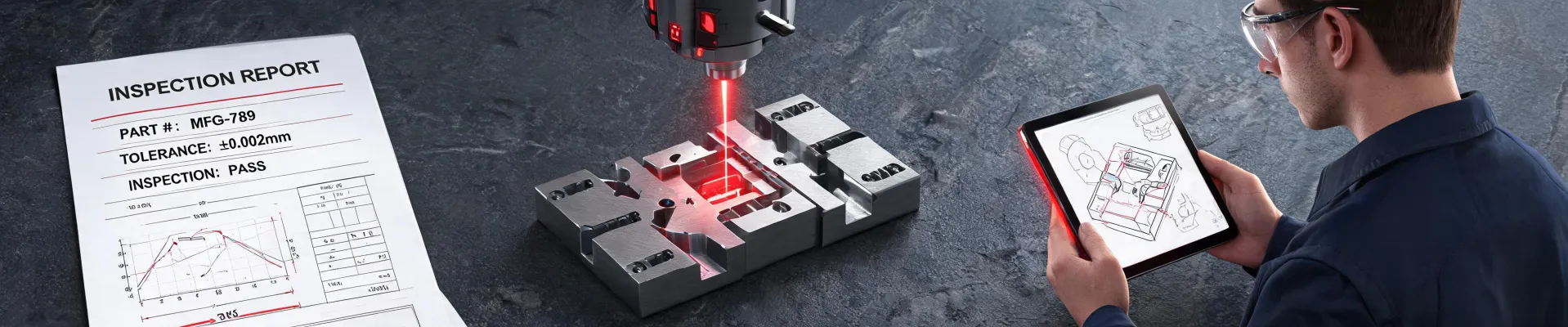
I remember the call in March 2024. A client needed 200 carbon fiber panels cut for an aerospace trade show—48 hours to deadline. Normal turnaround for laser-cut carbon fiber? About five business days. We had to make a call on the spot: which laser to use, what settings to run, and whether we could deliver without delamination or burning the resin.
That experience taught me something I've since confirmed across dozens of rush orders: whether a laser cutter can cut carbon fiber isn't a yes-or-no question. It's a "what's your setup, what's your budget, and how clean does the edge need to be?" question.
Here are the three most common scenarios I see. Each has a different answer.
Scenario A: You're using a high-power CO₂ laser (100W+)
This is the most common setup in industrial cutting. You've got a CO₂ source—maybe from a coherent-laser system, or an integrated machine from Trotec (which often uses Coherent sources). Can it cut carbon fiber?
Yes, but with caveats.
The problem with CO₂ and carbon fiber is the matrix. Most carbon fiber composites use epoxy or thermoplastic resin, which vaporizes at a lower temperature than the carbon fibers. Result: the resin burns, leaving a charred edge that may require post-processing. In extreme cases, the heat-affected zone (HAZ) weakens the laminate near the cut edge.
That said, for many applications—especially non-structural parts or where the edge will be covered—it works fine. For a rush order on display panels, the char was cosmetic. We delivered on time, and the client accepted the trade-off.
Best for:
– Non-critical parts (cosmetic panels, prototypes)
– Thick laminates where speed matters more than edge quality
– When you can budget for light sanding after cutting
Not ideal for:
– Structural components (the HAZ can reduce strength)
– Clean edges required without secondary finishing
– Thin prepreg materials that may delaminate
Scenario B: You're using a fiber laser (1µm wavelength)
Fiber lasers—like those based on a coherent verdi laser platform or other diode-pumped sources—operate at around 1µm. Carbon fibers absorb this wavelength well. The resin? Not so much.
Result follows.
Fiber lasers cut carbon fiber cleaner than CO₂ in many cases, especially for thin laminates. The HAZ is smaller because the fiber beam can be focused to a smaller spot. But there's a catch: fiber lasers don't handle thick sections well unless you've got very high power (500W+). For 1–2mm sheets, it's excellent. For 6mm plates, you'll likely still get edge burning unless you pulse the laser and use nitrogen assist gas.
I had a client call frantic last month. Their fiber laser had just arrived—a system that came with a coherent verdi laser source—and they needed to cut a batch of drone frames. The frames were only 1.5mm thick. We dialed in a pulsed setting, ran a test coupon, and the edges were nearly pristine. They shipped the order within 72 hours.
Best for:
– Thin sheets (1–3mm)
– Applications where edge quality matters (visible parts)
– Automated production where post-processing is cost-prohibitive
Not ideal for:
– Thick sections above 5mm
– Tight tolerances (laser kerf still matters)
– High-volume continuous cutting (thermal buildup in the lens can degrade beam quality)
Scenario C: You're using a UV or ultrafast laser
This is the premium option. UV (355nm) or picosecond/femtosecond lasers—such as Coherent's Monaco or HyperRapid series—can cold-ablated carbon fiber with virtually no HAZ. The pulses are so short that there's no time for heat to conduct into the surrounding material.
But it's expensive.
I'm not a financial analyst, so I can't speak to ROI models for every shop. What I can tell you from a production perspective is that these lasers cut carbon fiber beautifully—clean edges, no delamination, no post-processing. But the per-part cost is higher, and the cutting speed is slower than CO₂ or fiber.
We used a picosecond laser on a rush order for a medical device company in November 2024. The client needed 50 parts with zero charring—FDA requirements. Normal shop couldn't do it in the timeframe. We quoted a premium, got the job, and delivered 48 hours later. The edges looked like they were ground, not burned.
Best for:
– Medical or aerospace components with strict edge quality specs
– Thin prepreg materials that delaminate easily
– Small batches where cost per part is secondary to quality
Not ideal for:
– High-volume production (speed is lower)
– Budget-constrained projects
– Thick sections (still limited by laser power)
How to decide which scenario fits your situation
If you're reading this and thinking, "Which one am I?" here's a quick decision filter:
- If you already own a CO₂ laser and need to cut carbon fiber tomorrow, start with Scenario A. Run a test on scrap. Expect edge charring and plan for light sanding. If that's acceptable, you're done.
- If you're planning to buy a laser for carbon fiber work, lean toward fiber (Scenario B) for thin sheets and general purpose, or UV/ultrafast (Scenario C) if your clients demand pristine edges and your budget allows.
- If your parts are structural or subject to fatigue, reconsider laser entirely. Mechanical cutting (CNC router with diamond bits) may be better—no HAZ at all.
And if you're in the middle of a rush order right now—like I was in March 2024—call your laser supplier and ask two questions: "What's the maximum power I can run without HAZ damage?" and "Do you have nitrogen assist gas?" The answers will tell you which scenario you're in.
Most engineers I've worked with don't realize that laser cutting carbon fiber is entirely possible—you just have to match the laser to the thickness and the edge quality requirement. A coherent-laser system can handle all three scenarios, but the specific model matters. A coherent verdi laser works great for thin fiber cutting. An ultrafast Monaco handles the critical jobs. The trick is knowing which one to reach for.
I've been doing this long enough to know that transparent pricing goes a long way. When quoting a rush carbon fiber job, I always list the laser type, expected edge quality, and any post-processing needed upfront. The vendor who lists all fees upfront—even if the total looks higher—usually costs less in the end. No surprises, no renegotiation halfway through.
Bottom line: can a laser cutter cut carbon fiber? Yes, absolutely. But don't expect one machine to do everything well. Pick the scenario that matches your reality, and you'll be fine.